
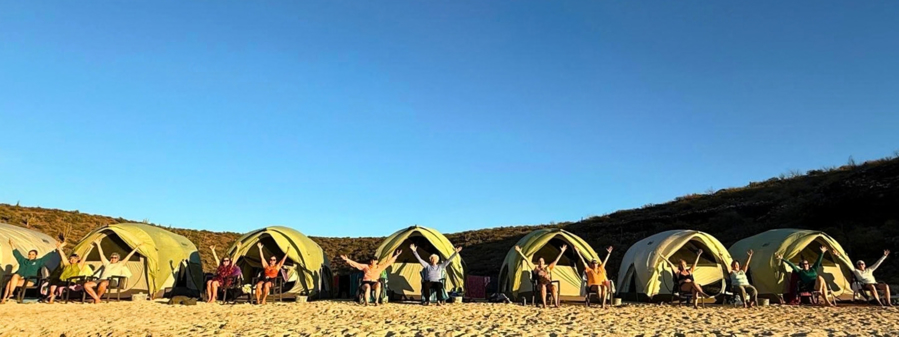
If you picture "camping" and think of cold ground, a headlamp and food cooked over a fire, this isn't that. On our Baja Unplugged: An Island Escape on the Sea of Cortez trip, we spend four nights on Espíritu Santo, a protected island in the Sea of Cortez. We sleep on the beach and are lulled to sleep by the sound of the waves. This also isn't camping in a sleeping bag. You get real mattresses and fresh linens, and your tent is cleaned daily. Add a chef who prepares sea-to-table meals and a daily happy hour with fresh margaritas, and we totally forget we once called it "camping."
Here is what a stay on the island is actually like. We share it through our guide's trip recap and the words of travelers who were there in January 2026.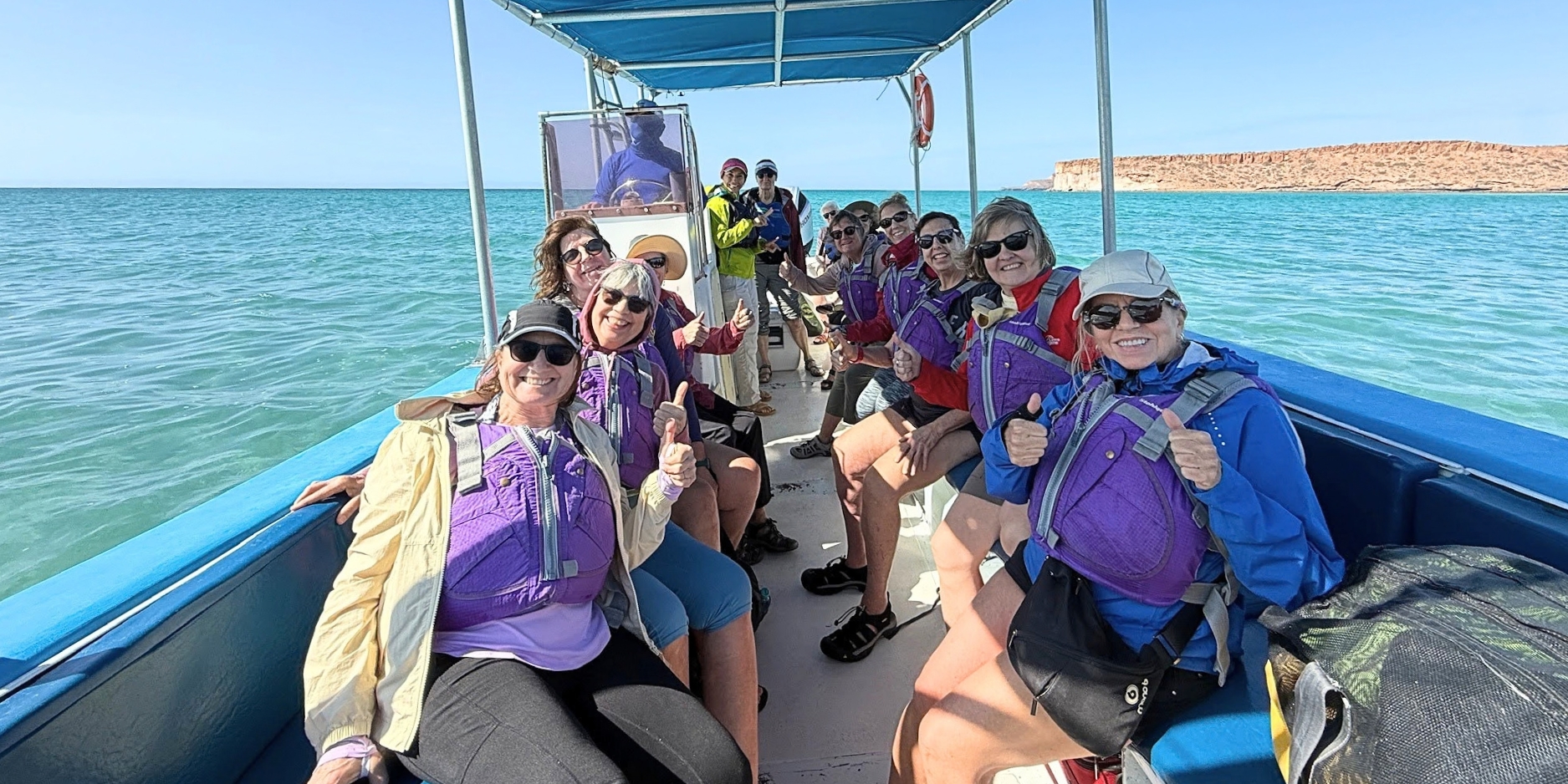
Getting There Is Part of the Adventure
Our Baja trip begins in Todos Santos. The group then heads to La Paz and makes the crossing to the island by boat, which takes about 90 minutes.
Before taking a ride on the boat, there is, of course, the needed gear. Annika N., the AGC guide on the January 2026 departure, wrote that everyone was fitted for a life vestl at our local partner's warehouse in La Paz. The group then picked up some snacks and headed to the port at Pichilingue to start the crossing. The water was rough that day, but the group loved it.
"Big waves and a big splash zone had us all laughing and everyone stayed in great spirits despite the powerful ocean conditions."
Annika N., AGC Guide, from the January 2026 post-trip letter
Annika explained that Captain Jorge kept everyone safe in their boat, the "Ponchito II," and that the group knew they were in great hands for the week. She called the crossing "a great bonding experience, to say the least." Conditions on the Sea of Cortez change from day to day, so your own crossing may be calmer.
Before reaching camp, the group stopped at Bahía Gabriel. They saw frigatebirds and visited an old oyster farming site where mother-of-pearl was once harvested. It was the first of many wildlife and history stops along the way.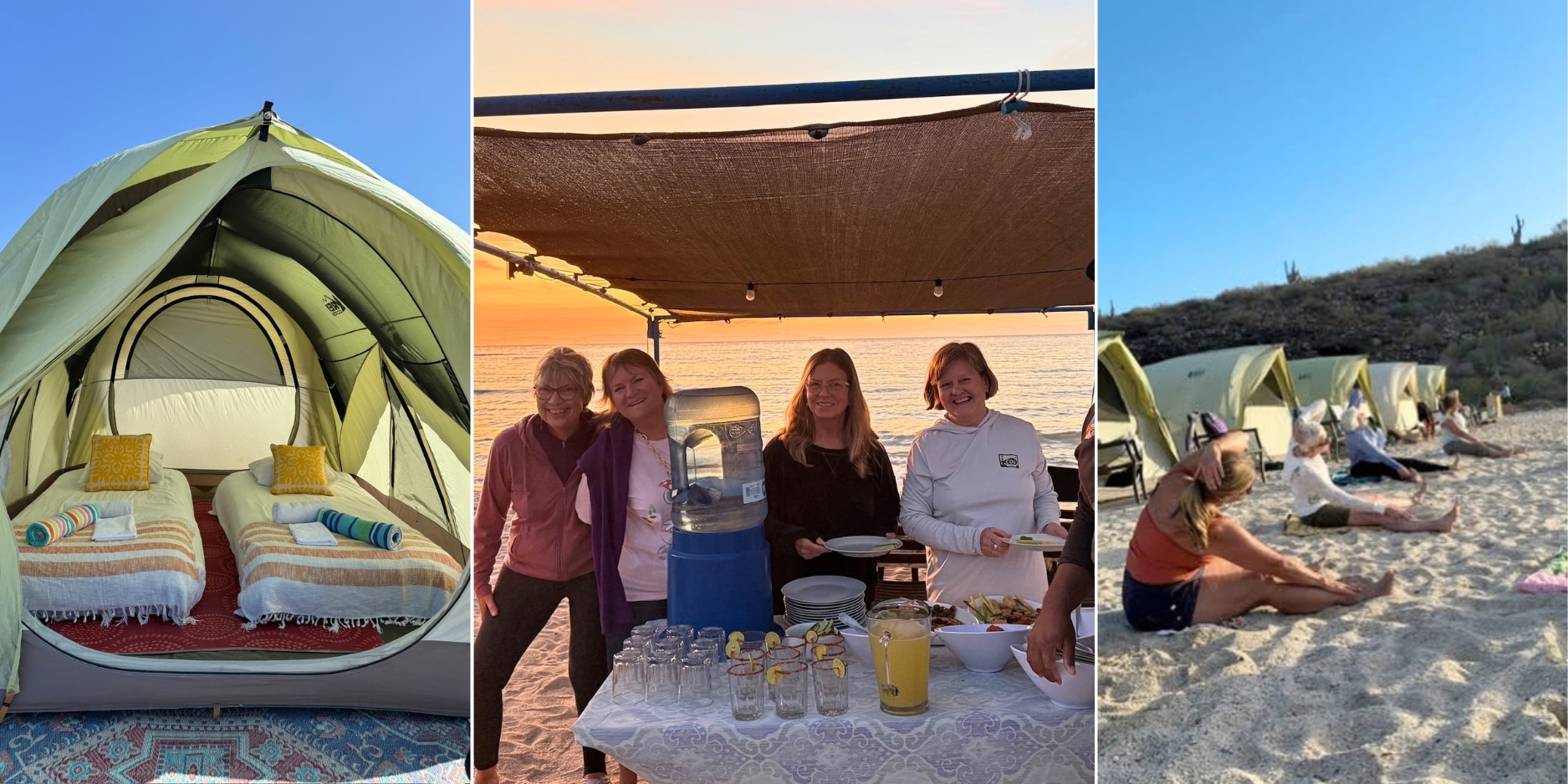
The Camp: Comfortable Tents on a Beautiful Beach
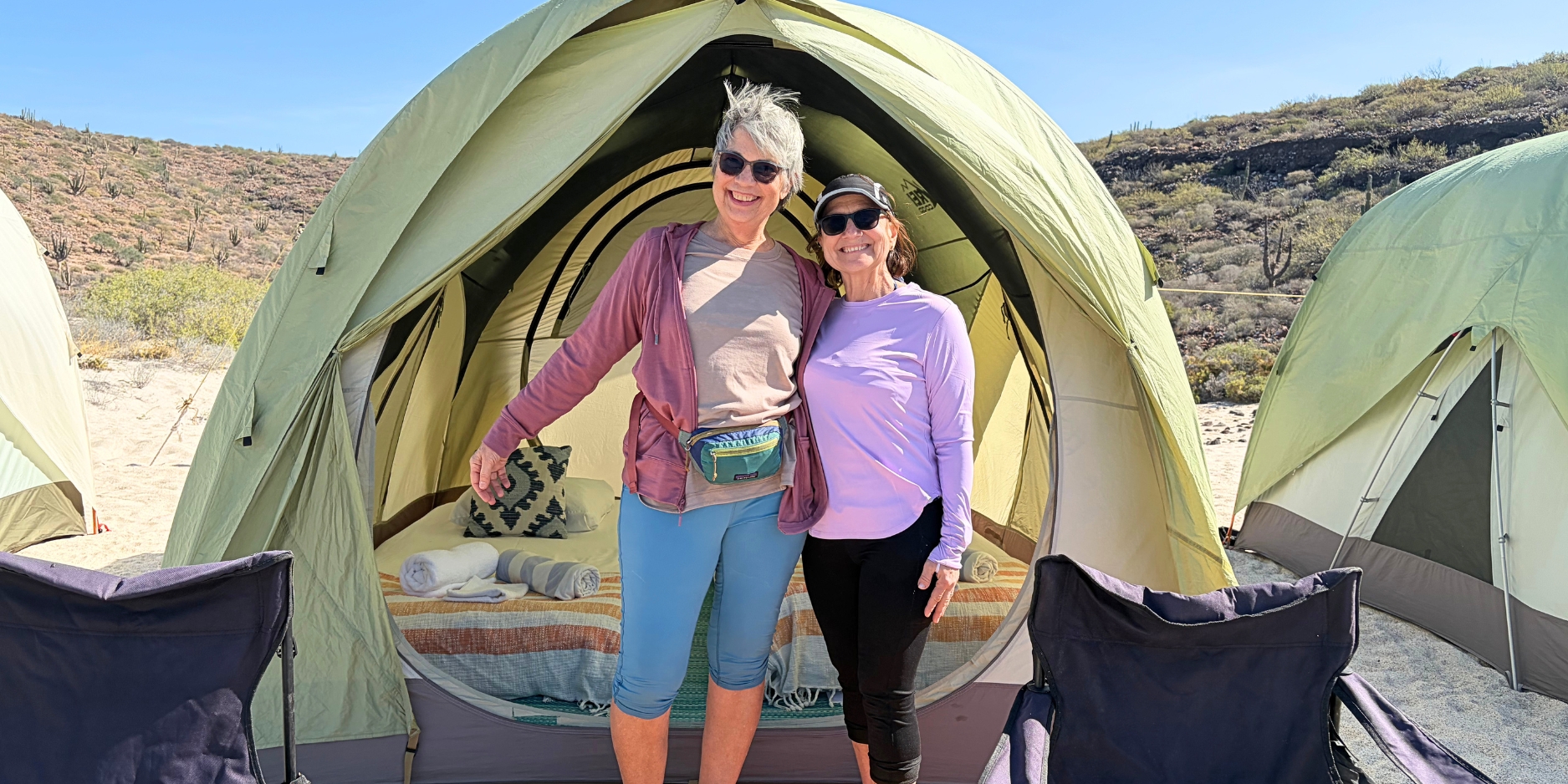
Home for the week is Camp Cecil, a row of tents on the sand with turquoise water just beyond them. It sits in Bahía Dispenza on one of the island's most beautiful beaches. It blends beautiful rustic vibes with complete comfort everywhere else. Here is what the camp includes:
-
Large dome tents with real beds and soft linens.
-
Tents that are about 6 feet high and 83 square feet, with either one king bed or two twin beds.
-
Towels for the beach and the bath, and chairs outside.
-
Compost toilet cabanas and sunshower cabanas.
-
A beachfront café where an on-site chef prepares every meal.
Annika described her group's first look at the setup, she was honest about the basics.
"After oohing and ahhing about our fabulous glamping tents in Bahia Dispenza at Camp Cecil, we got our formal introduction to the compost toilets and solar showers" -Annika N., from the January 2026 post-trip letter.
That is a fair picture of the camp. The bathrooms are simple, and the showers are solar. The rest is more comfortable than most people expect. AGC Baja traveler Marilee R. listed what stood out to her, and the list starts with housekeeping:
"Tents cleaned every day! Comfortable beds and linens. There are water troughs to rinse feet," said Marilee R.
A trough to rinse your feet sounds small. On a beach, it's one of the nicest touches in camp. You step out of the sand, rinse off, and climb back onto a clean bed with fresh linens. AGC Baja Traveler Carol B. also loved the setup:
"I loved camping in very comfortable tents on the beach," said Carol B.
Carol's line also shows how many travelers feel. They come expecting to rough it, and they leave talking about how comfortable they were.
Annika also mentioned that the winds and waves were strong overnight on the first night. She wrote that "most folks reported sleeping well out in Nature." If you're a light sleeper, the sound of the water is usually the thing that lulls you off.
The Food: Chef-Prepared Meals and Daily Happy Hour<
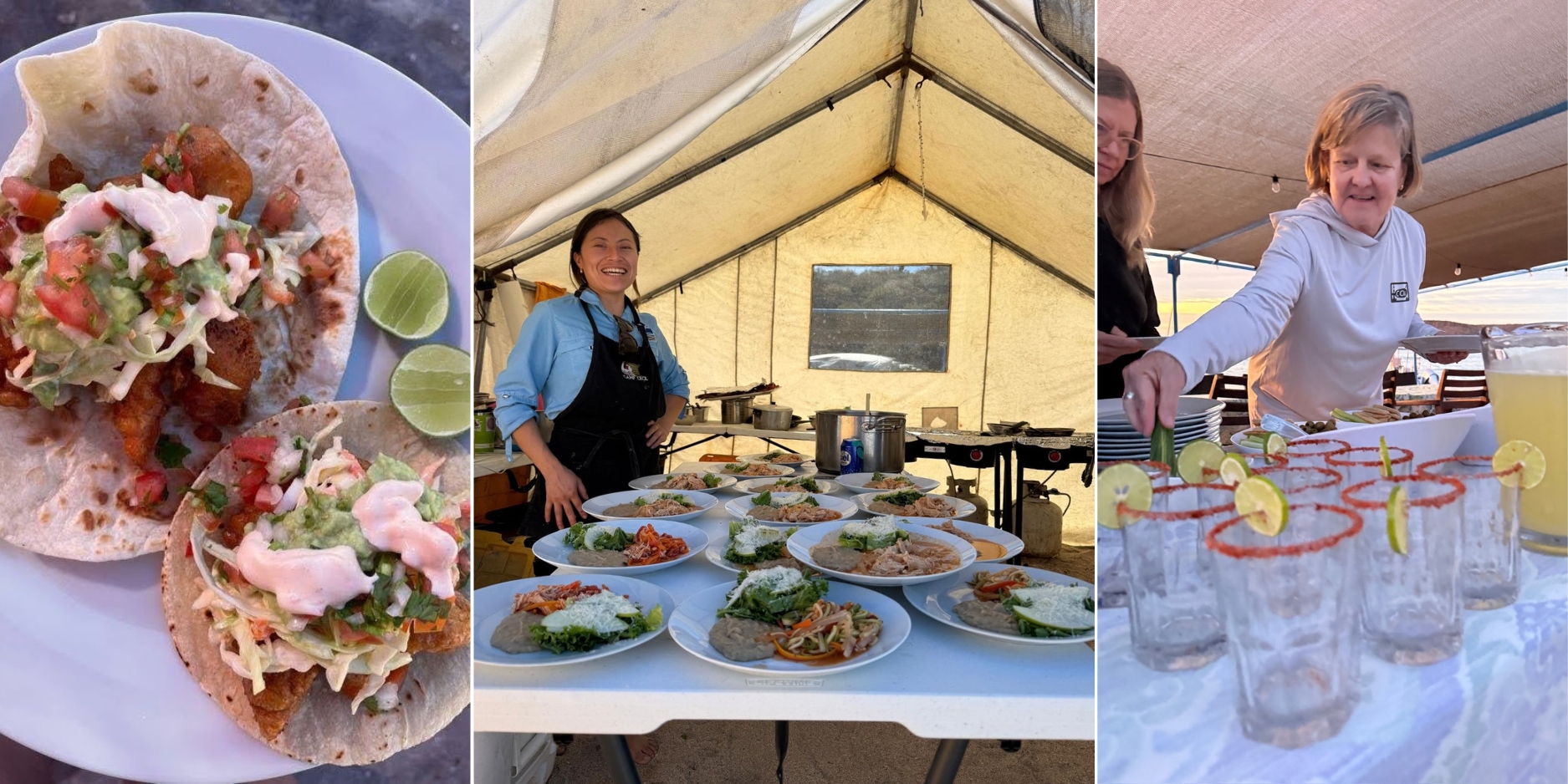
You don't cook at all on this trip. An on-site chef prepares every meal in the camp's beachfront café, and happy hour happens daily. Our local partner’s chefs create meals from the freshest local ingredients from land and sea, often featuring the catch of the day and fresh vegetables. That is impressive for a kitchen on a remote island.
Annika gave a sense of what that looks like. The first meal at camp on the January 2026 adventure was ceviche. That night, after margaritas at happy hour, the group sat down to a three-course dinner of cauliflower soup, beef with corn, and a "camp" strawberry cheesecake. "It was the icing on top of a great first day," said Annika.
Carol B. put the food in one sentence: "The food was outstanding and the wonderful trip guides, both AGC and local, really made the trip especially fun," said Carol B.
Marilee R. listed it among the best things about her week: "The island staff were so attentive to our needs.....great meals, happy hour and a cold beer" she said.
Marilee's point is easy to miss. It isn't only the food. The staff pays attention, which makes remote camping feel easy.
A Day on the Island
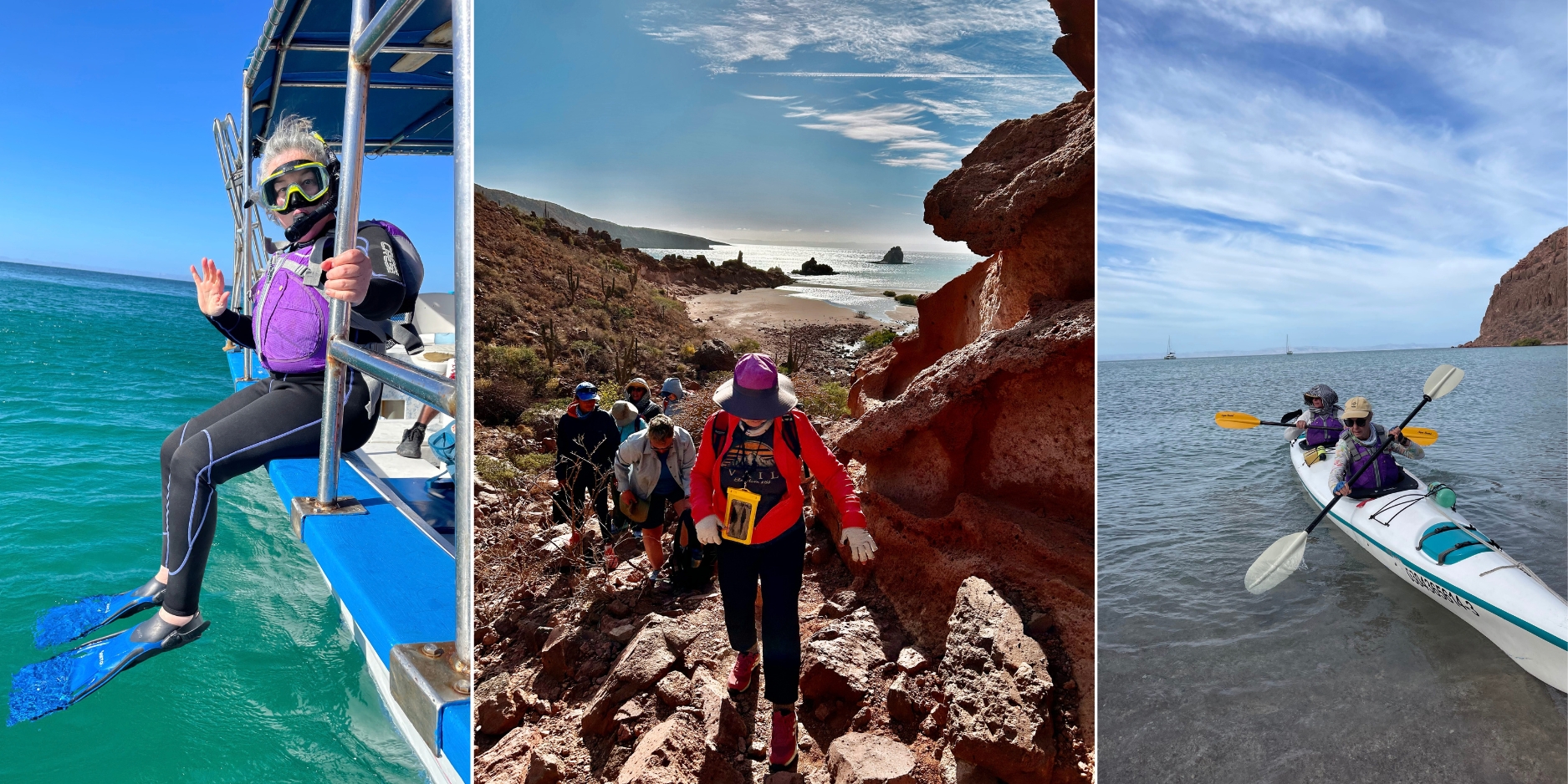
There isn't one fixed schedule. The guides plan each day around the wind, tides and weather. You can choose from various beach activities. These activities include snorkeling, kayaking, stand-up paddleboarding, swimming with sea lions, hiking and bird watching. You can also skip any of it and read or nap on the beach.
What Mornings Look Like
Days start slowly. Coffee on the beach is a favorite, and Annika's group began most mornings with a stretch session before heading out. Marilee remembered the mornings fondly:
"Yoga on the beach was amazing! I loved drinking coffee while watching the sunrise," she said.
Time on the Water
In Baja, a day quickly turns into something special. On one morning, Annika’s group was on the boat on the way to a snorkel site when they saw a pod of dolphins and a sea lion eating a fish. Annika called what came next "a real life National Geographic moment." An egret, a seagull and a pelican all went for the same bit of leftover fish. Later, the snorkelers swam with green sea turtles.
That afternoon, the group split in two. One group went out for a sunset “seafari”, and the other stayed for kayaking. As soon as the “seafari” group left the bay, they saw a humpback whale breach. They rushed back to get everyone else.
"Let it be known, if you shout 'WHALE!,' this group of ladies will set a speed record for getting on the boat," said Annika N.
The whole group watched the whale for a while. Back at camp, they paddled into the mangroves at sunset and were greeted by hundreds of pelicans. Sightings change by season and by day, so your own week may look different. Still, it shows what the days can hold.
The Star of the Island, The Sea Lions
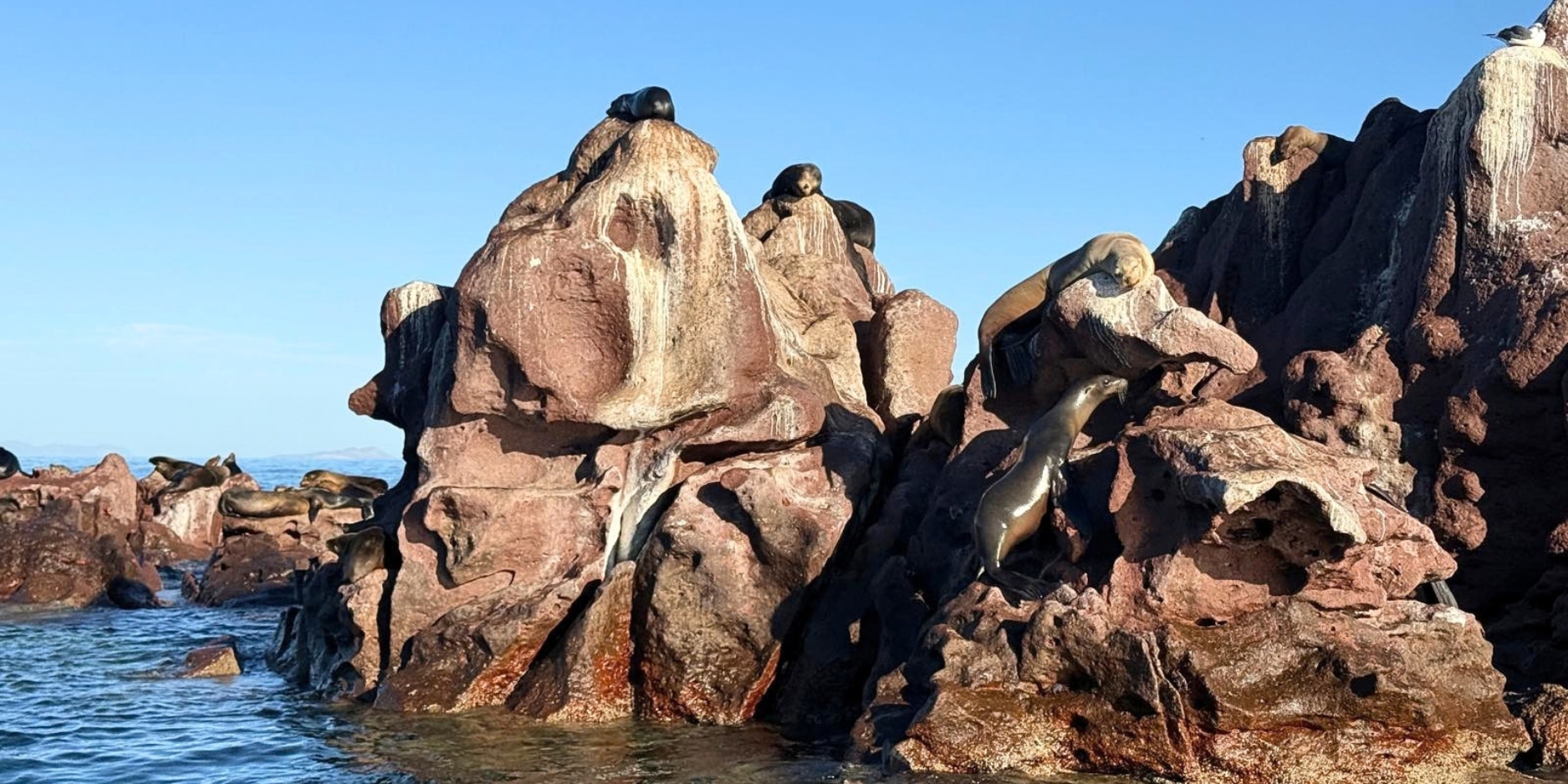
For many travelers, this is the highlight. On their third full day, Annika's group went past the island's northern tip to a sea lion colony. They spent an hour in the water. Annika shared that the sea lions "barked, played, sunned, and dazzled us with their curiosity and sweetness." One pup came right up to the group.
AGC Baja Traveler Cynthia named the baby sea lions as the stars of her week. She had a long list of competitors: "We saw so much wildlife including birds, and more birds, sea creatures galore- whales, dolphins, turtles, fish, and the show stealers of the week, baby sea lions," added Cynthia F.
Learning the Island
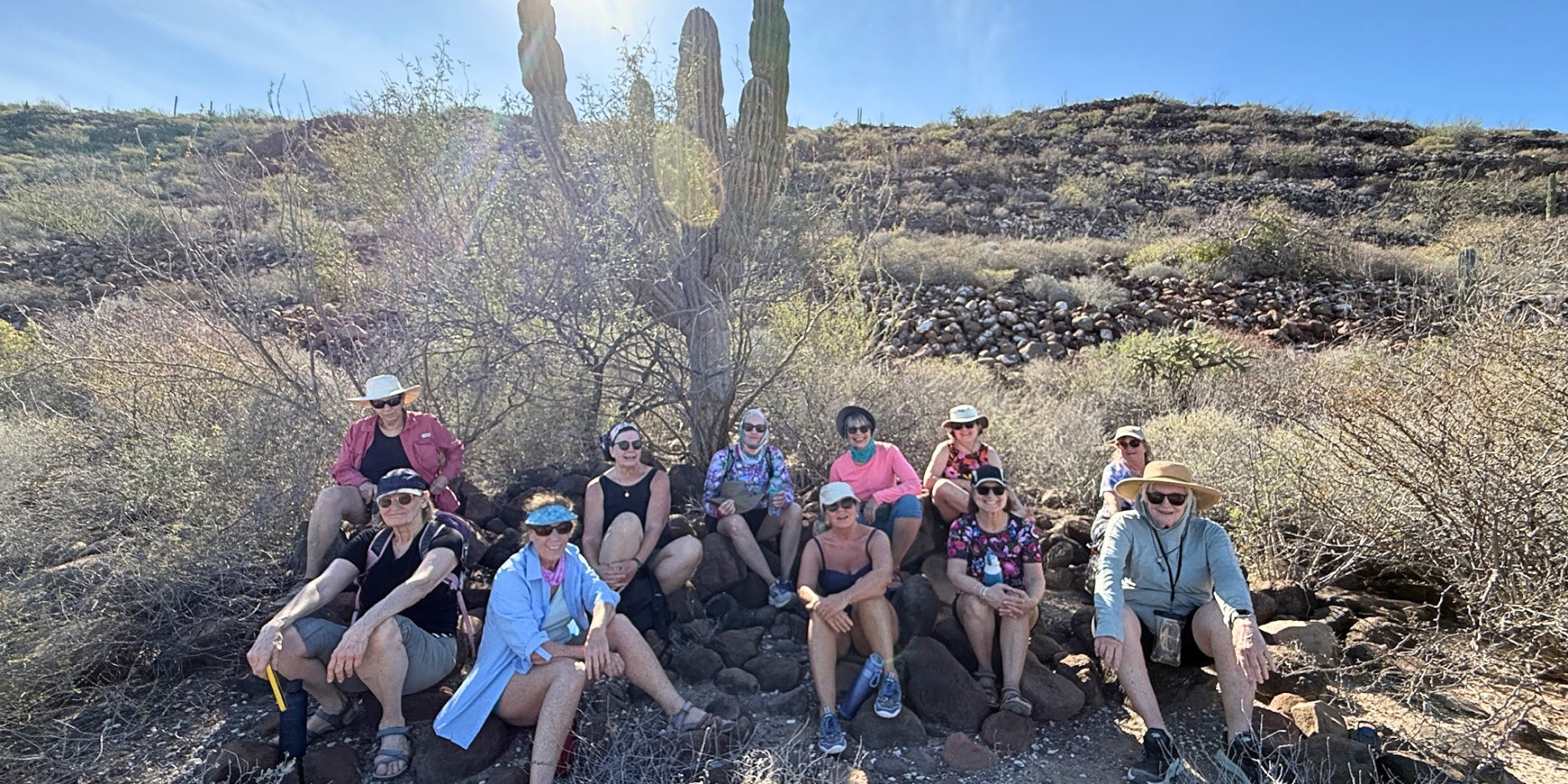
The guides are local, bilingual naturalists who make the island make sense. On Annika's trip, local guide Andrea gave a geology talk about the island's volcanic rock and ash. She also taught the group how cardón cacti survive in a dry climate. The ridges give the cactus shade as the sun moves and trap morning dew. The indentations are from years of drought, and a big, bulging cactus has plenty of water. Details like this help you connect better with the place you’re visiting.
Cynthia noticed how much the guides knew: "The in-country guides were outstanding - so friendly and accommodating to every question and request. They were very knowledgeable about the flora and fauna of the island," she said.
Marilee agreed, and she focused on how generous they were: "The guides were exceptional and so generous with their knowledge and time," she said.
Our local partner's guides are certified Wilderness First Responders. They also hold NOM-9 certification as naturalist guides and are Leave No Trace certified. That is a lot of expertise to have on a boat, a beach and a hike.
What Evenings Entailed
The day ends with happy hour and dinner. Annika's group also loved the boat ride back to camp at sunset on the first day. Traveler Theresa described it: "It felt like the feeling you have after a massage."
After dark, the stars come out. We stargaze as part of the trip; I mean, how could you not when your “bedroom” offers the best views of the skies? The lack of lights makes the sky easy to see.
What You Might Not Expect
You will probably be busier than you imagined.
Many people picture a beach trip as hammock time with an occasional swim. Cynthia F. pictured the same thing before she arrived.
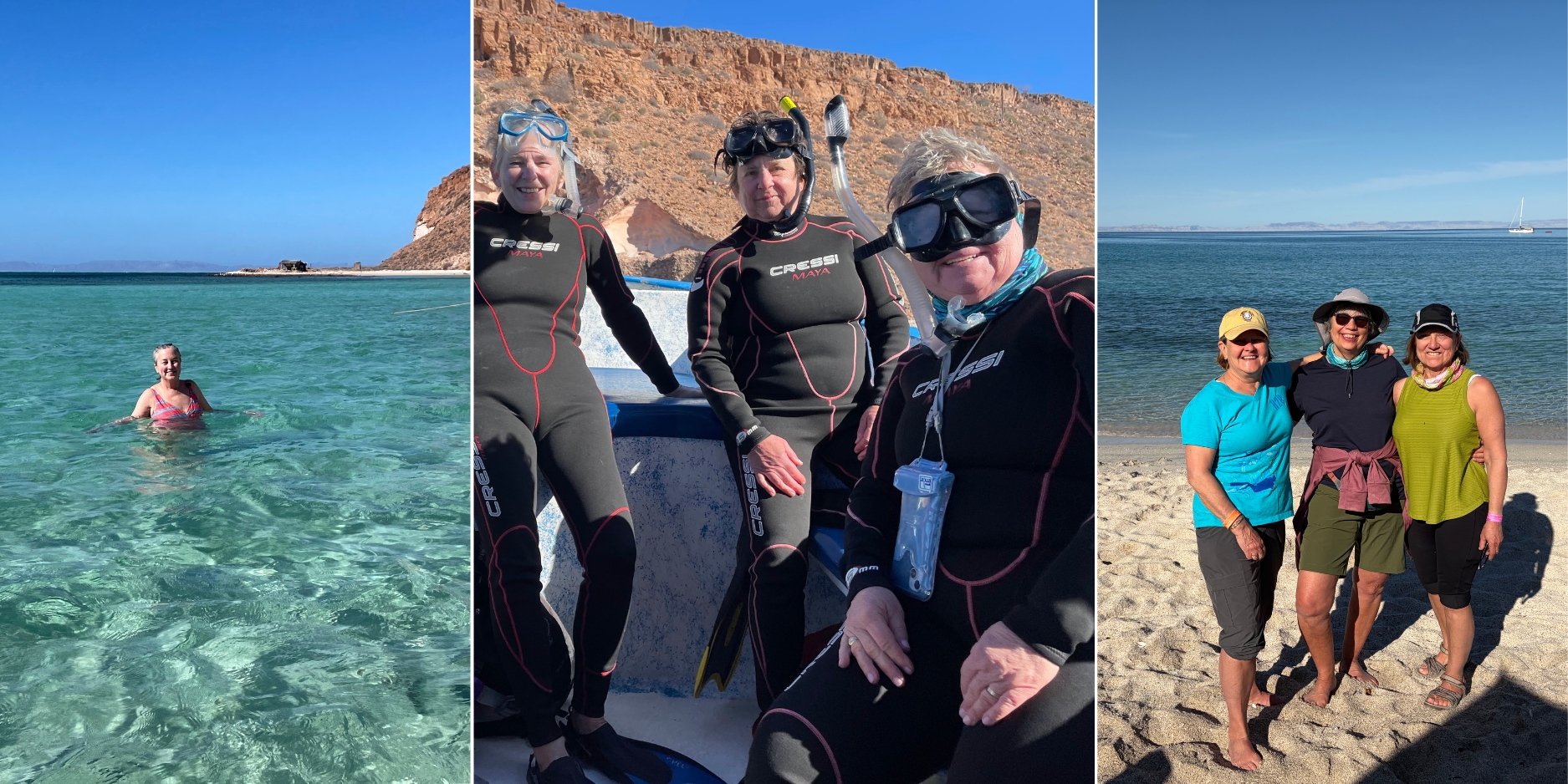
"I pictured relaxing in the sun on the beach - little did I know we were on the go on exciting adventures, all day every day - and I wouldn't want it any other way," said Cynthia.
In a single day, Annika’s group hiked, snorkeled, and learned about cardón cacti. Some travelers went out on a sunset “seafari”, and others paddled through the mangroves. On another day, the group saw dolphins on the way to the snorkel site, swam with green sea turtles, and chased a humpback whale. A whole day was spent at the sea lion colony.
That is a lot, and it is optional. This is a Level 1 trip, and you can sit out any activity. Some travelers will say yes to everything. Others will take a long afternoon with a book and a cold drink, and that is a good day too. Nobody has to prove anything.
You will do a little gear wrangling.
Before the boat ride, the group is fitted for a wetsuit, flippers, a life vest, goggles and a snorkel. Annika wrote that everyone waded out to the boat on snorkeling mornings. Cynthia noticed that the gear was part of the trip, and she said so at the closing circle:
"This trip included the unadvertised sport of putting on a wetsuit, walking on sand, and getting in and out of the boat," she said.
It's funny, and it's also true. You may feel a little clumsy in a wetsuit on your first morning. Everyone does, and the group laughs about it together. Annika said her group "crushed it," and she thanked them for saying yes to everything, "even if it was brand new to you." You don't need any experience before you come. The guides walk you through kayaking, paddleboarding and snorkeling at the start of the week.
You will be off-grid.
The island is far from everyday life, and it's easy to underestimate how much that changes the days. People stop checking and start noticing. They watch pelicans work as a team for a dinner of sardines, or the light change on the water. AGC traveler Jo M. found that this was the point of the trip: "Being completely off-grid for a few days was the perfect antidote to the craziness of life."
The island days follow the sun and the tides, not a phone. You wake to the sound of the waves. Coffee is on the beach. Evenings are for happy hour, dinner and stars. Four nights give you time to settle into that pace.
You will become friends fast.
The group is small, with a maximum of 12 women, and most people arrive as strangers. Marilee R. said the group became companions quickly:
"Excellent companions in spite of being strangers at the start," said Marilee R.
Annika shared a similar note:
"Wow - it's hard to believe that we started this journey as strangers and left feeling like familia," she added.
The island does a lot of the work. You share a bumpy boat crossing and a splash zone. You share meals, morning stretches, and sunset happy hours. You also share jokes. On Annika's trip, one traveler got a bag of snacks and was told it cost "TWO PESOS!" That became a running joke for the week. Annika wrote that her "cheeks are still sore from all of the smiling and laughing."
When you spend four nights together with no schedule to rush through, you talk more. By the closing circle, Annika's group was sharing gratitude for the local guides, the new friendships, and what she called "memories of a lifetime."

Why Espíritu Santo Is Worth the Trip
Espíritu Santo is a 31-square-mile island. UNESCO named it a biosphere reserve in 1995, and Mexico declared it a national park in 2007. The waters around it hold sea lions, dolphins, sea turtles, manta rays, whale sharks and tropical fish. The island also has fantastic birdwatching, with herons, pelicans and cormorants among the birds you may see. People call it "the aquarium of the world."
The island has human history too. The Pericú people lived here thousands of years ago and left funerary caves, rock art, and fish hooks made of seashells. In 1535, it was named the "Island of the Pearls," and about a century later it was renamed "Espíritu Santo," or "Holy Spirit."
The island is protected, so how we visit matters. Our local partner, Todos Santos Eco Adventures, is family-owned and has operated since 2002. It has eliminated single-use plastics and is Leave No Trace certified.
Ready to Unplug?
If you want warm water, wildlife and a few days away from it all, this might be your trip. It's a Level 1 adventure with no experience required, four nights on a protected island, and a small group of women to share it with.
Explore our Baja Unplugged: An Island Escape on the Sea of Cortez trip for dates and prices, or download the trip summary to share with a friend.