
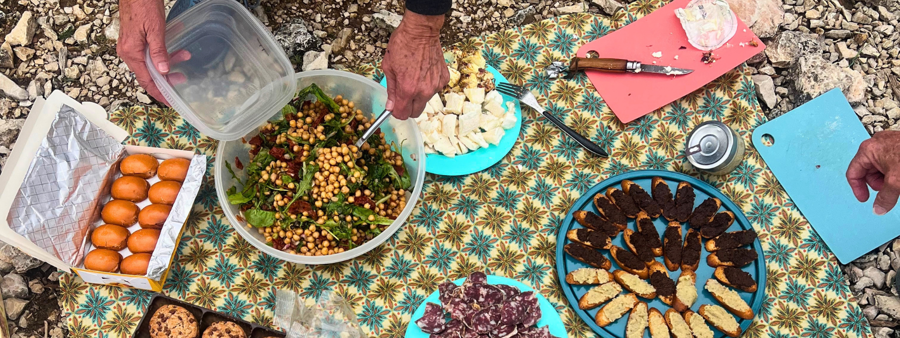
One of the first questions travelers ask about a trip is often about the trails’ terrain and how to prepare for it. Another, sometimes asked a little more quietly, is about the food. Will there be something I can eat? Will I have enough energy for the day? If I have an allergy, will anyone know before we sit down to dinner?
Those are great questions. Food is part of feeling comfortable on an adventure, and it is part of experiencing a place. A picnic packed before a hike, dinner at a family-run restaurant, or a meal prepared by our guides can become a favorite trip memory. The best time to tell us what you need is before you book, especially if you have a severe allergy, Celiac disease, or several restrictions. What we can arrange depends on the itinerary, the kitchens involved, and how remote the trip is; but most often, we can accommodate to whatever food preference, restriction or allergy.
“Food is a big part of any trip—it adds so much to the experience! That’s why I make food an important part of our pre-trip call. I want to know what you normally eat at home, what foods you love, and what you really don’t like. Understanding your tastes and preferences helps me plan meals that everyone in the group will enjoy, while also making sure your individual needs and dietary preferences are met,” AGC Guide Jaime Renaud said.
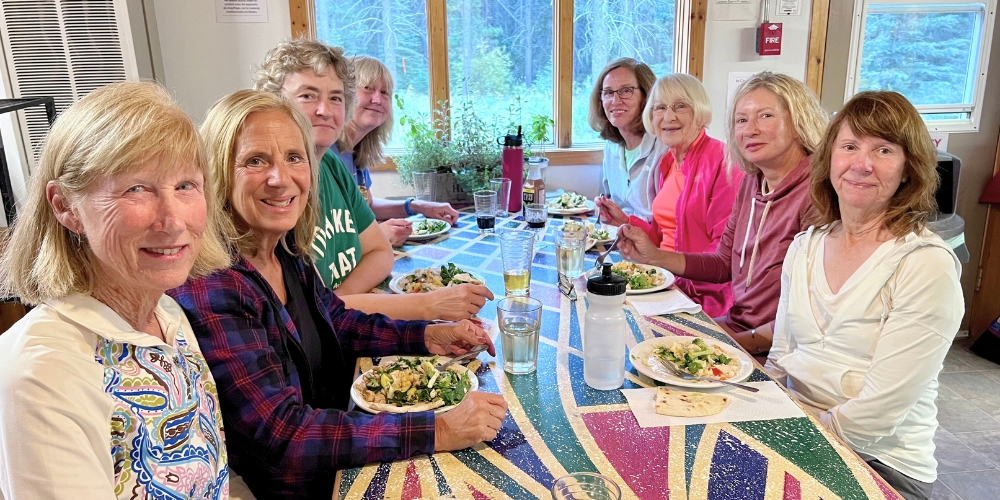
Tell us early, and be specific
AGC asks about food allergies and dietary preferences during registration. The more specific you can be, the easier it is for our team to discuss what a particular trip can offer. “Vegetarian” and “vegan” tell us something different; “gluten-sensitive” and “I need food prepared without any gluten cross-contact” are different needs, too. If an ingredient is unsafe for you, tell us that plainly rather than waiting to share the details during the trip. Our guides do a lot of prep work ahead of time, they know exactly what they will be cooking and who for before you even arrive on the trip.
With advance notice, we can happily accommodate most dietary restrictions or allergies on domestic trips, including vegetarian and vegan diets and gluten intolerance. International trips vary more. That is why we review each trip with you instead of making one promise for every destination. Some meals are made by AGC guides, others by a lodge or local restaurant, and some are eaten on the move. Each destionation gives us different options.
For severe allergies, Celiac disease, or other significant restrictions, please call the AGC office before registering. Several trip pages state that kitchens cannot guarantee they are free of cross-contact. We would rather have a clear conversation about a trip's limits before you commit than leave you trying to solve a problem at a remote dinner table.
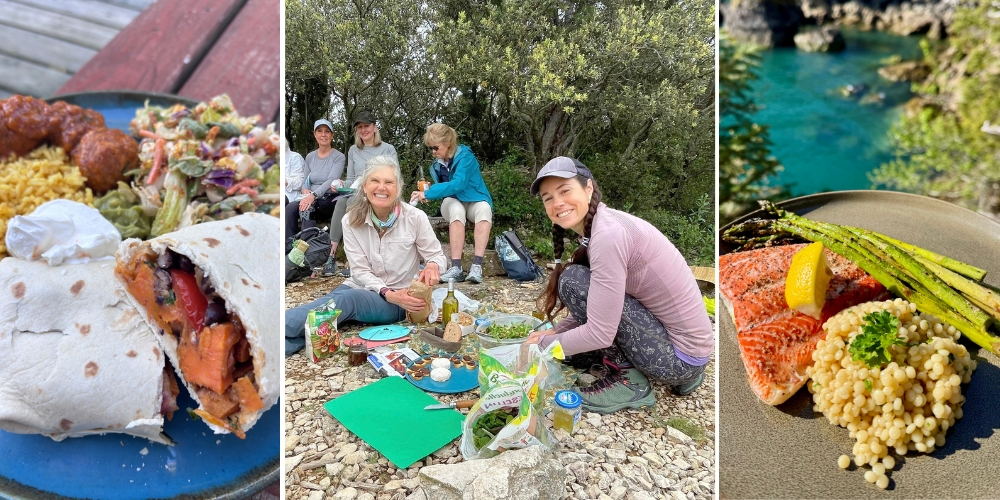
What food planning looks like from trip to trip
On most domestic trips, guides prepare breakfasts, set out lunch fixings, and cook dinners. Each meal cooked by a guide is made genuinely with love. They aren’t just preparing a freezer meal or setting out PB&Js; they truly make good food and will likely introduce you to new flavors. We tend to go out to a restaurant at least once, maybe a few times on a trip depending how long it is. So, it’s up to the restaurant to accommodate.
International itineraries often involve local partners, hotels, and family-run establishments. We share dietary information ahead of time and talk through what is realistic for that itinerary; travelers should also speak up during the trip if a meal does not seem right for them.
Bringing a few familiar foods can make an active day easier. We suggest if you’re used to specific snacks, such as protein bars or vegan staples, then bring them along on the trip. That way you can ensure that on long, active travel days, you have the food that will fuel you. You simply know what works best for your body, so even though it’s a vacation, it’s still important to look after yourself.
“One of my favorite meals to prepare is Mediterranean pasta because it’s so easy to adapt to different dietary needs. I serve it with lemon-pepper chicken, and for vegetarians or vegans, I add lemon-pepper chickpeas. Cheese can be served on the side, and gluten-free pasta is always an option when needed. That way, everyone can enjoy essentially the same delicious meal while still having it tailored to their specific needs," AGC Guide Jaime added.
There is also a difference between a preference and a medical necessity. We want to know about both, but the options can narrow in small or remote kitchens. For example, the Tour du Mont Blanc Highlights trip says vegetarian meals are easily accommodated, while other dietary issues need a conversation with the office; its small, remote hotels cannot meet every food preference. The right trip is the one whose actual food arrangements work for you. We’d hate for you to be somewhere remote where you can’t get the medical assistance you need.
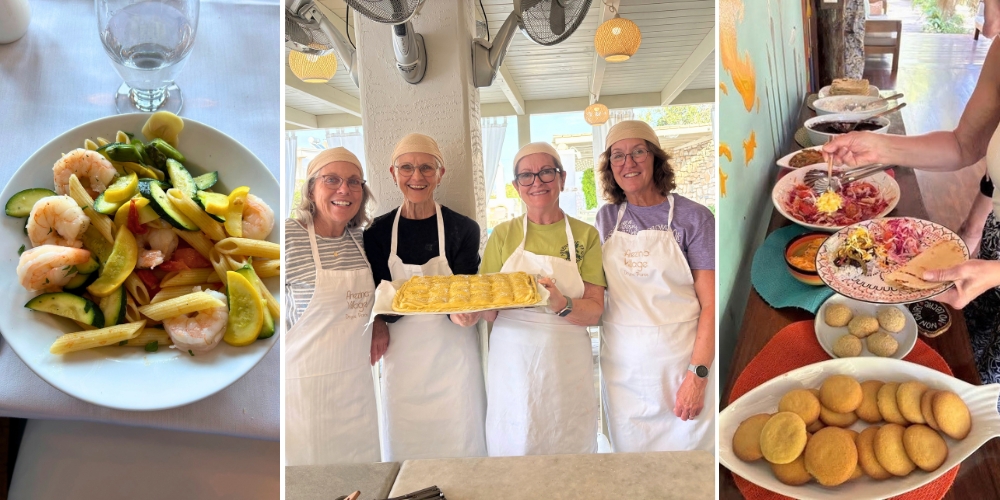
Trips to consider if you love vegetarian food and fresh ingredients
For some travelers, a memorable meal is part of the adventure. These trips offer plenty to look forward to, from farm-to-table dinners in the redwoods to a Greek cooking class and fresh tropical fruit. Vegetarian options vary by trip, so let us know what you eat, including whether eggs and dairy are on your menu, and check the trip FAQ before booking.
Wonder and Wellness in the Redwood, California
The Historic Requa Inn's farm-to-table dining is a trip highlight, and the itinerary includes all meals from the first dinner through the final breakfast. This is a strong choice if you want fresh food to be part of a restorative, lodge-based week. With advance notice, the Inn can accommodate vegetarian and vegan diets, as well as lactose-free and gluten-sensitive diets. It cannot guarantee a completely gluten-free kitchen or one free of cross-contact.
Paradise in Panama Wellness Retreat
At Casa Cayuco, the trip features chef-prepared meals made with local ingredients, with a primarily plant-based menu alongside locally caught fish. That makes the eco-lodge portion appealing for vegetarian travelers who enjoy produce-forward meals. While in Panama City, vegetarian choices can be more limited; we recommend bringing a plant-based protein supplement if that is a concern.
Island Hopping in the Greek Islands
This is a food-centered adventure, with a Greek cooking class, local meals, and dinners that typically offer a vegetarian entree. The trip can accommodate vegetarian diets with advance notice. It is an attractive option if you want food and culture woven through the itinerary, though travelers with severe allergies or Celiac disease should call before registering.
Tropical Tranquility: Costa Rica’s Wild Pacific Coast
The trip offers fresh Costa Rican food with rice, beans, vegetables, and tropical fruit. Vegetarian diets can be accommodated with advance notice. For someone who likes simple, fresh meals in a warm coastal setting, this is another trip to explore. Vegan travelers are asked to bring some additional protein bars, and the kitchen cannot be guaranteed free of cross-contact.
The best meal starts with a conversation
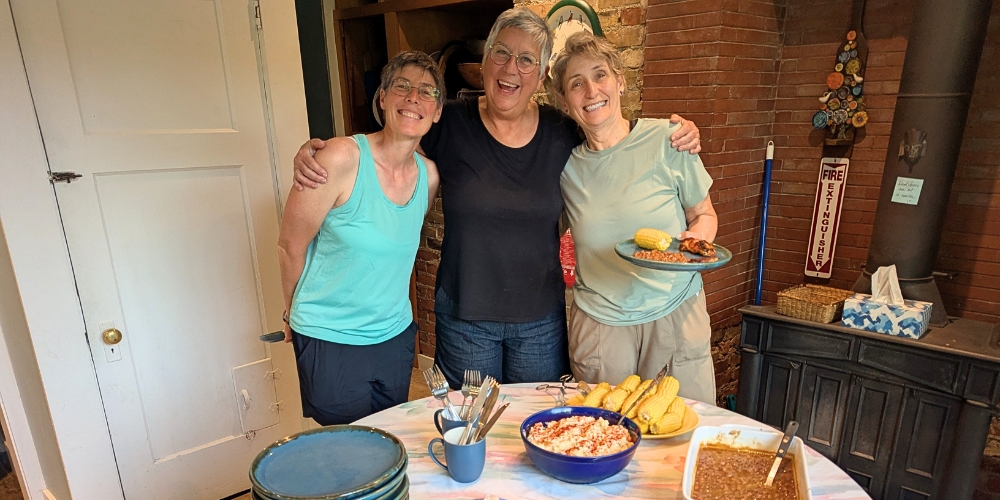
The point of planning is not to make every traveler eat the same thing. It is to give each woman the information she needs to choose an adventure she can enjoy. Tell us what you eat, what you avoid, and what is medically necessary. Ask us how meals work on the trip you are considering. Then pack the familiar snacks that help you feel your best between meals.
That preparation makes room for one of the pleasures of traveling together: sitting down after a day on the trail, sharing a meal, and talking about everything you’ve experienced. As AGC Guide Jaime Renaud puts it, “To me, good food, shared around the table, is an important part of the adventure—and often becomes one of the memories we take home with us.”