
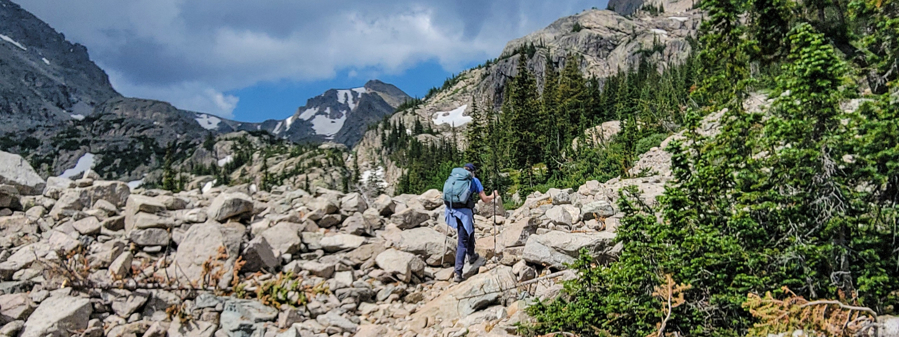
Do your knees talk to you–or yell at you–when you go for a hike? Are you afraid you’ll never be able to do a multi-day hiking trip in a beautiful place again?
Don’t throw in the towel yet! The following checklist and action steps will likely reduce your pain and improve your capabilities for your hiking adventures!
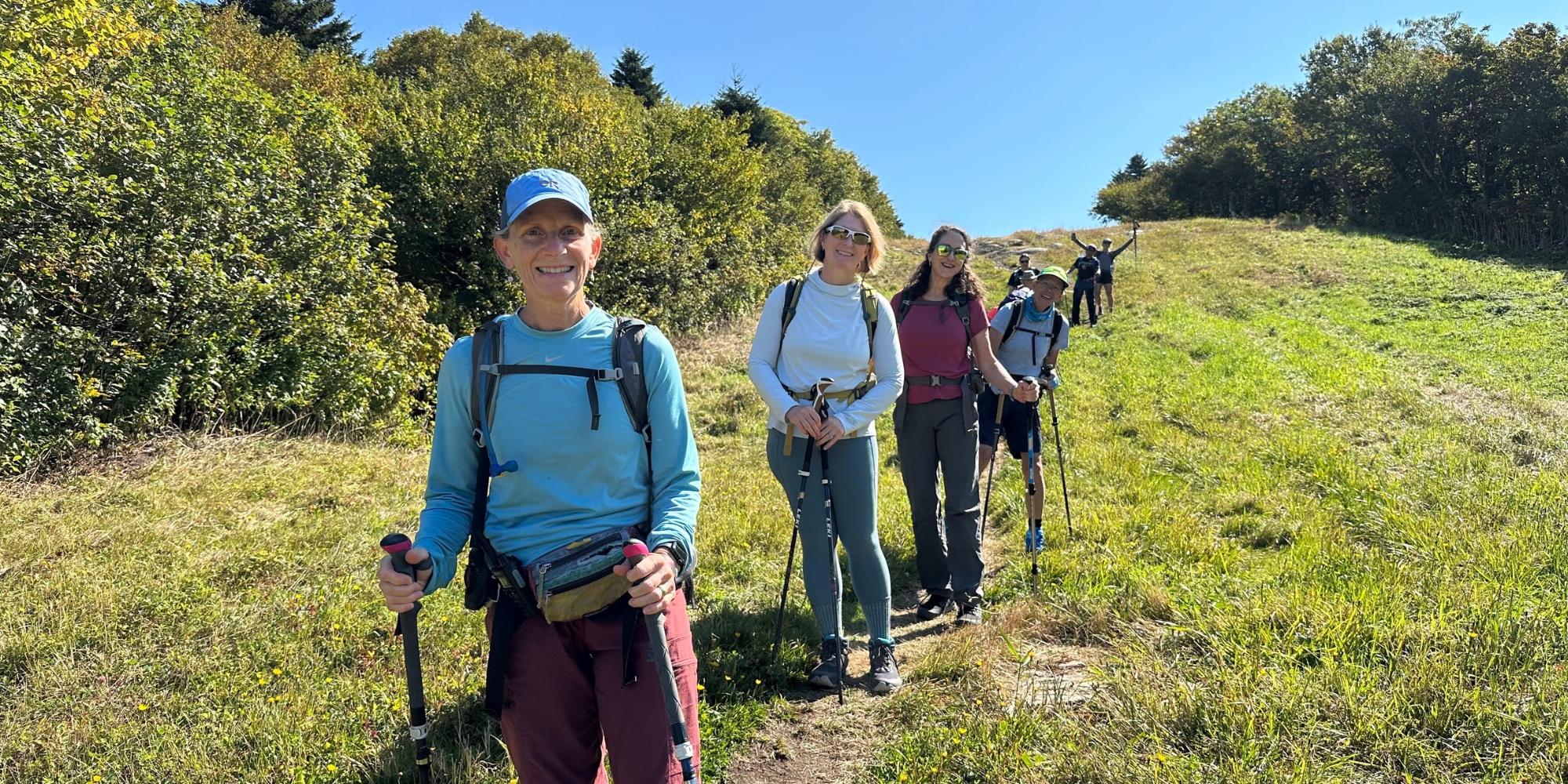
Why Women’s Knees Are Vulnerable
If it seems like more women you know have knee issues than men, it’s not a coincidence. The knee is a complex system of bones, muscles, tendons and ligaments. This complex makeup makes the knee vulnerable to injury, especially if any of the components are weak, tight, or out of alignment.
Women’s physical structure, with their (usually) wider pelvis and shorter femurs, aligns the muscles, tendons and ligaments that stretch from the pelvis (specifically the Anterior Superior Iliac Spine) to the patella at a greater angle.
It’s known as the Q angle, and the greater the angle, the more stress it puts on the patella. When the patella is being pulled, it can cause more wear and tear on the knee joint.
Another reason women may be more prone to injury is imbalances in strength. A smaller percentage of women do strength training regularly than men, and even fewer did so in the past.
Although hiking builds leg strength, it tends to be more focused on the quadriceps. This can lead to imbalances in the hamstrings and glutes. Intentionally building all the leg muscles creates more resilient hiking legs.
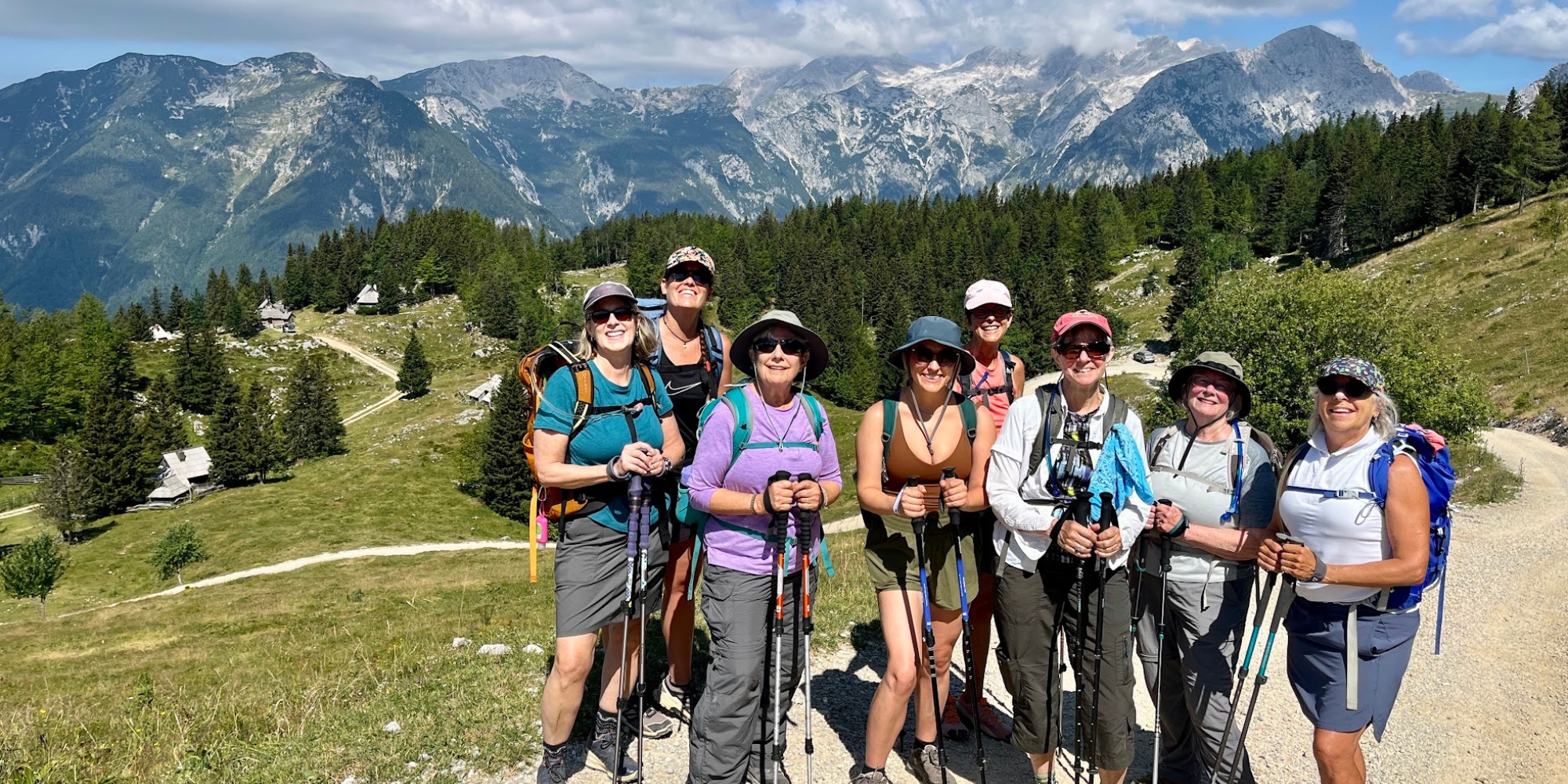
What You Can Do – A Checklist for Knee Care
Although you can’t change your Q-angle or past injuries, you can still take steps to improve your knee strength and support system. A combination of these may make the difference between a tolerable and an incredible next hiking adventure.
-
Build up leg strength through structured, intentional resistance training . Loading the muscles in a controlled environment and allowing them to recover (at least 1 day of rest between strength training sessions) leads to them getting stronger.
-
Do single-leg exercises to minimize the stronger leg compensating for the weaker one. Some options are included in this video.
-
Include lateral strength-building exercises so knees are prepared for side-stepping and other unusual movements on the trail. You could choose from various lateral movements mentioned in this video.
-
Keep up with physical therapy exercises if you’ve done PT for your knees before. Consider consulting with a PT for an updated list tailored to your current situation and the strength-training exercises you’re doing (so you don’t overdo it).
-
Build hiking volume gradually . Our bodies are built to adapt and get stronger when we do more with them, but too much too soon can lead to injuries. A general guideline is to add 10% per week (so if you’re walking/hiking 10 miles per week, then add 1 mile per week), though those with knee pain may want to cut this back to a 5% increase per week.
-
Include downhill walking/hiking and real stairs in your training. Even training on a slight decline can help. If you’re a flatlander, you may need to get creative. Check out parking garages, bridges and multi-story buildings. Stair machines and most treadmills are not designed to simulate downhills.
-
Make sure your backpack fits well and load it appropriately. Check out this blog post for an in-depth explanation of selecting and loading your pack.
-
Wear shoes or boots that support your feet well and have appropriate cushion and tread for the terrain you’ll be hiking on. Also be mindful of replacing footwear when it’s getting worn down, which depends on how many miles you’ve put on them.
-
Use trekking poles ; they significantly reduce knee impact. If you’re not already a convert to the trekking pole tribe, check out this blog post.
-
Develop knee-friendly habits for hiking downhill , including taking smaller steps to reduce impact, hiking in a zigzag pattern if possible (creating your own mini-switchbacks), and side-stepping on big step-downs.
-
Warm up with dynamic stretches before you start hiking. This allows the muscles, ligaments and tendons to use “motion as lotion” to be ready for their effort. Check out this short warm-up routine and consider taking it with you to the trailhead.
-
Stretch for a bit after your hike to help the muscles, ligaments and tendons re-set before you rest. A few basic stretches, such as those in this video, should do the trick.
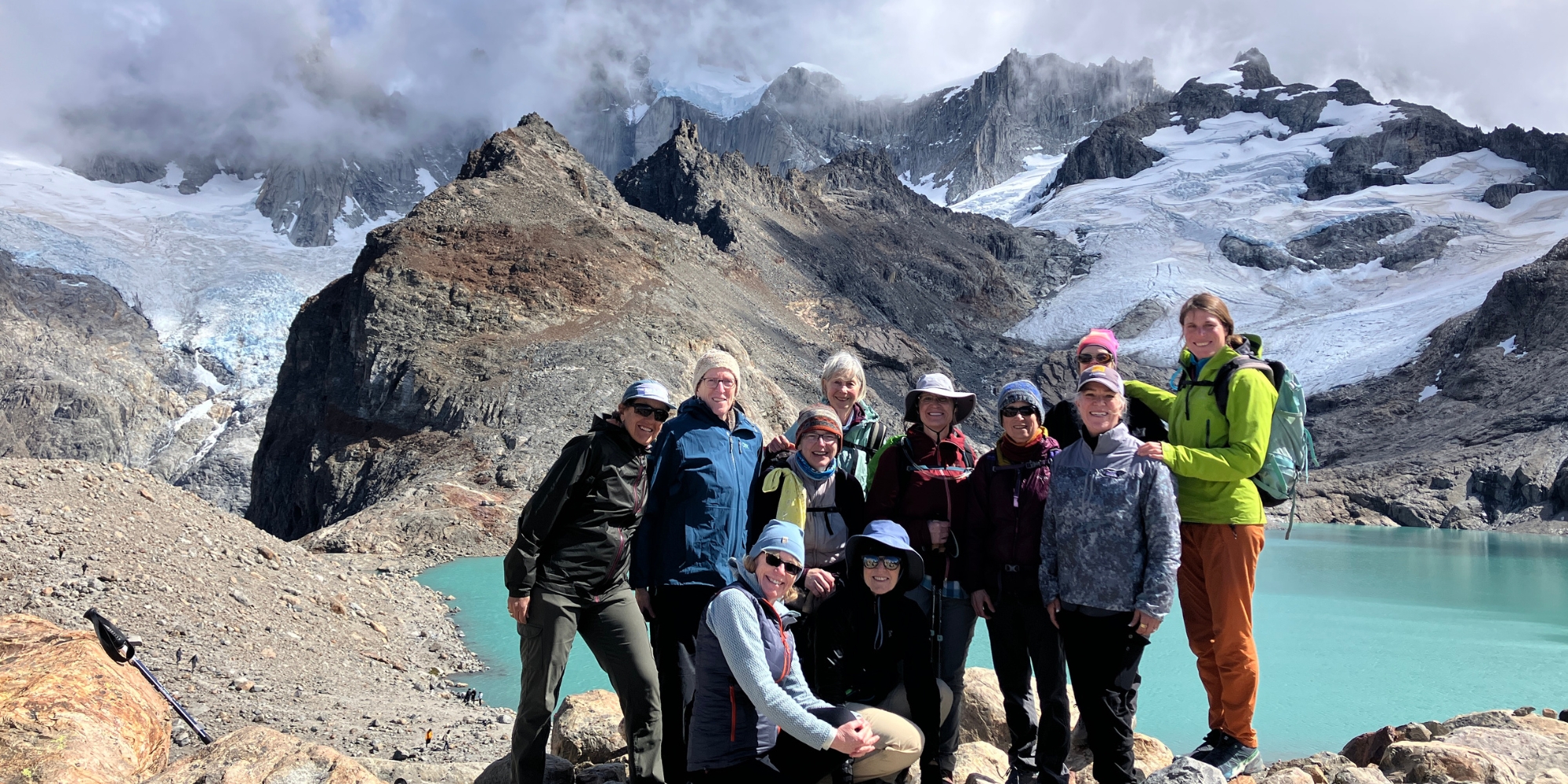
Of course, if you’re experiencing sharp, constant, or debilitating knee pain, consult with a medical professional. With some intentional adjustments, consistency, and patience, you’ll make it easier on your knees and other joints as well.
Here’s to hiking stronger and longer for years to come!