
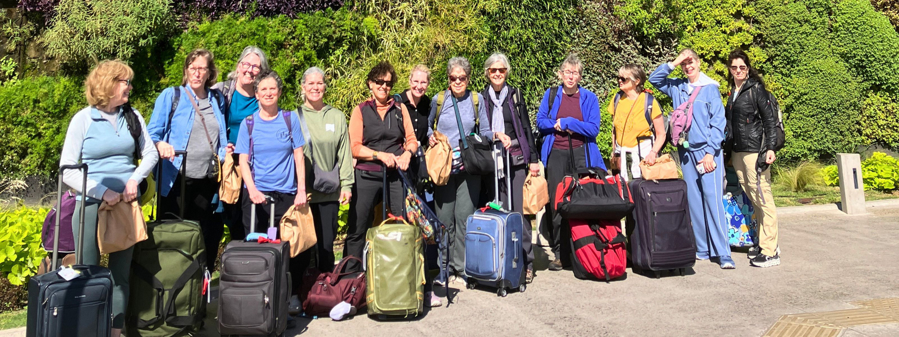
When you’re heading out on an AGC hiking adventure—especially one that involves flights, transfers, or multiple stops—what you pack and how you pack it have a big effect on your entire trip. Packing light definitely makes traveling to and from the meeting point easier and also helps create a little peace and breathing room as you change accommodations throughout the trip.
The good news is that packing light doesn’t mean going without. It means being intentional with your list. Consider the seven tips below to help lighten your load, stay comfortable, and remain fully prepared for everything, from long trail days to group dinners in town.


Tip #1: Rewear Clothes
One of the biggest barriers to packing light is the idea that you need a fresh outfit for every day. In reality, rewearing clothes is totally practical and doable (and nobody minds, we promise).
Plus, technical hiking clothing is designed for exactly this purpose. Quick-dry fabrics and odor-resistant materials (like merino wool) can be worn multiple times without stinking or feeling icky. Instead of packing five shirts for five days, you might only need two or three that you rotate. Maybe this is gross and not an option if you’re in a super muddy or sweaty environment, but I also like to rewear pants and socks. Take this advice as far as you feel comfortable; everyone has their ‘fresh every day non-negotiables.’ Mine are for sure undies and sunshirts in the desert.
Outfit overlapping can dramatically reduce the weight and bulk of your bag. It also simplifies your daily routine; if you only have one option for a chilly sunny day, you don’t even have to think about what you’re going to wear.
Tip #2: Wash clothes in your hotel room
If you’re rewearing clothes multiple times, a simple washing system can be helpful. Sink washing keeps your pack light while still giving you access to clean clothes throughout your trip. A tiny bottle of biodegradable soap, like Dr. Bronner's, can go a long way. Plug your hotel sink, fill it with water, and submerge your clothing in there with a little soap. A small squirt is enough to wash essentials in a sink—think socks, underwear, or a shirt after a particularly sweaty hike, but I wouldn’t recommend it for any big or bulky items like jeans.
Give your laundry a good scrub, drain the sink, and rinse the clothes out well. Hang them to dry by a window or in front of a fan if possible. Most quick-dry fabrics will be ready to wear again by morning, if hung properly (unless if you’re in a seriously humid location).
Tip #3: Pare down your footwear
Shoes are often the heaviest and most awkward items to pack, so the simplest solution is to wear your hiking shoes while you travel. Whether you’re navigating an airport or hopping into a shuttle, wearing your most substantial footwear frees up valuable space in your bag.
For post-hike comfort and activities, bring a pair of lightweight sandals, such as Chacos or Bedrocks. These are perfect for letting your feet breathe after a long day on the trail without sacrificing support, and they’re thin enough to slide into a snug carry-on bag. This go-to two-shoe system—hiking shoes plus supportive sandals—covers your needs without overloading your luggage.
Tip #4: Packable Trekking Poles
Trekking poles are incredibly useful in general (which is why they are recommended on the majority of our trips) but they can be a hassle in airport security checkpoints. If you’re committed to the carry-on, small folding poles are a great option for adventurers on the move. Unlike traditional telescoping poles, these collapse down into compact sections that fit easily into a suitcase or backpack.
They still provide the same benefits—balance, stability, and reduced strain on your joints—without the awkwardness of carrying long, rigid poles through airports or on public transportation.
Tip #5: Use your backpack and your suitcase
If you’ll be packing all your things into a hiking backpack and a suitcase or duffel, how you distribute your gear matters more than you might think. First, decide if you can designate your hiking pack as a personal item.
A helpful strategy is to place heavier items from your hiking pack into your suitcase during travel, while stuffing lighter, bulkier items into your backpack as your personal item. This keeps your backpack manageable and easier to carry when you’re on the move.
Once you reach your destination and prepare for the trail, you can reverse the process—putting only what you need into your hiking pack and leaving the rest behind.
This kind of flexibility makes transitions smoother and reduces unnecessary strain on your body.
Tip #6: Buy Toiletries Upon Arrival
Toiletries are another area where weight and bulk can quietly add up. Instead of bringing all your full-size products straight from your bathroom, opt for travel-sized versions or decant your essentials into small containers. And the lowest-bulk option for a toiletry bag is a trusty ole gallon-sized plastic baggie.
Another easy option is to purchase toiletries upon arrival at your destination. This can be especially helpful for items you don’t need immediately or that are widely available, like shampoo, sunscreen, or toothpaste. Most AGC trip itineraries include a stop at a grocery store on the first day for this reason.
Keeping your toiletry kit minimal not only saves space but also makes packing and unpacking faster and more efficient.
Tip #7: Leave your Nalgene at home
Hydration is essential on any hiking trip, but your water system doesn’t have to take up unnecessary space when you’re traveling.
Water bladders—like those used in CamelBak packs—are a great option because they pack down incredibly small when empty. They’re easy to carry and convenient to use on the trail, especially if you like sipping water as you walk.
If you prefer drinking from bottles, consider a different approach: instead of packing bulky reusable bottles like Nalgene, you can simply buy a few large bottles of Smartwater when you arrive.
These bottles are lightweight, durable enough for repeated use, and typically just the right size for backpack side pockets. They can serve as reliable water containers for the duration of your trip without taking up space in your luggage beforehand.
Overall: The Minimalist Attitude
At the heart of all these strategies is a simple idea: pack for versatility, not excess. Every item you bring should serve a purpose, and ideally more than one. Not all of these tips will work for every trip, but one or two might help you save a little space in your carry-on.
When you rewear clothing, wash small items as needed, minimize bulky gear, and stay flexible with how you carry things, you create a travel system that works with you rather than against you.