
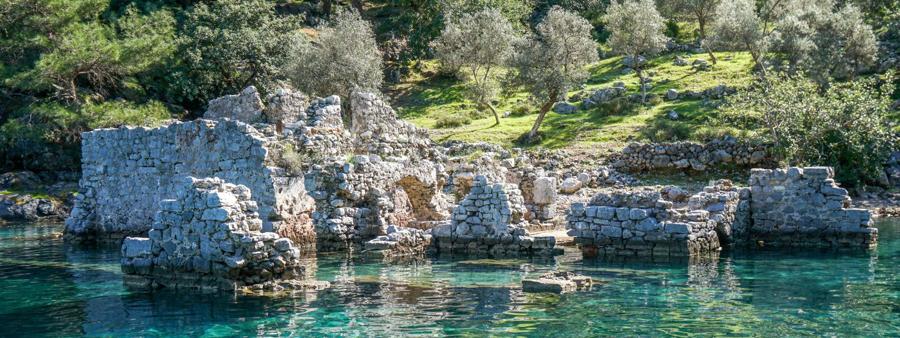
You slip into impossibly clear turquoise water and begin swimming toward what looks like scattered stones beneath the surface. As you get closer, the shapes become more recognizable: fragments of walls, submerged foundations, pieces of an ancient structure slowly reclaimed by the sea.
Local legend says Cleopatra once swam here.
Along Turkey’s Turquoise Coast, stories like this are everywhere. Ancient cities rise from hillsides. Cliff tombs overlook hidden coves. Roman ruins appear beside hiking trails and just below the water’s surface. Mythology, history, and everyday life blend together in a way that can feel almost impossible to separate.
And that’s part of what makes this coastline so fascinating. The Turquoise Coast isn’t just beautiful. It’s layered. Beneath the beaches and quiet bays lie thousands of years of human history, from Lycian civilizations and Roman bathhouses to sacred caves dedicated to ancient gods and goddesses.
So, did Cleopatra actually swim here? The truth is more complicated and far more interesting.
Cleopatra’s Baths: The Legend and the Ruins
One of the most famous stories along the Turquoise Coast centers around Manastir Bay, often called Cleopatra’s Baths.
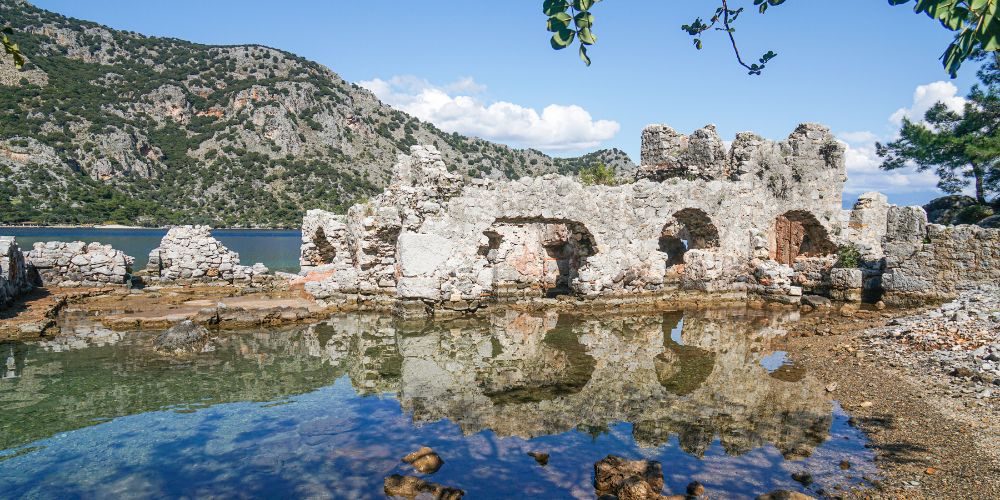
According to local legend, Roman general Mark Antony built a luxurious bathhouse withing a scenic cove in the Gulf of Fethiye as a gift for Cleopatra. The secluded cove, surrounded by pine-covered hills and calm turquoise water, was supposedly chosen for its natural thermal spring and peaceful setting. Over time, stories grew that Cleopatra herself swam in these waters, drawn to the bay for its beauty and restorative properties.
Whether or not Cleopatra actually visited remains impossible to prove. But the ruins themselves are very real.
The partially submerged stone walls and foundations scattered throughout the bay date back to the Roman era. Archaeologists believe the structure was once part of a bathhouse or small settlement along this active coastal region. Over centuries, powerful earthquakes, which are common throughout southwestern Turkey, have dramatically reshaped portions of the coastline, causing sections of the structure to collapse into the sea.
Today, that history creates one of the most unique swimming and snorkeling experiences on the coast.
Instead of viewing ruins from behind ropes or museum glass, visitors can float directly above them. With a snorkel mask and a little curiosity, it’s possible to swim over ancient stone corridors and foundations while schools of fish weave through the same waters that once connected entire civilizations.
It’s this blend of history and immersion that makes the Turquoise Coast feel different from many archaeological destinations. Here, the past isn’t separated from the landscape, it’s woven directly into it.
The Ancient Sanctuary Hidden Above Marmaris
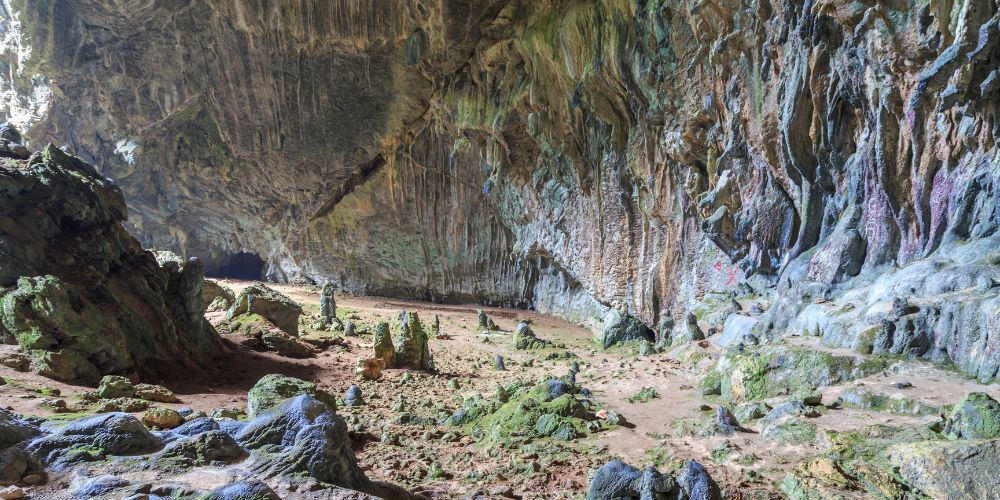
The sea isn’t the only place where ancient history reveals itself along this coastline. High above Marmaris, near Heaven Island, sits the Cave of Nimara, an archaeological site that tells an even older story of human connection to this region.
At first glance, the cave feels quiet and unassuming. But excavations conducted by the Marmaris Museum uncovered evidence of continuous human activity stretching back thousands of years. Archaeologists discovered stone altars, terracotta figurines, beads, and ritual offerings inside the cave, confirming it was once used as a sacred sanctuary.
The site is closely connected to the ancient Anatolian Mother Goddess tradition and later associated with Leto, the mother of Apollo and Artemis in Greek mythology.
Inside the limestone cavern, researchers found a semi-circle of small stone altars surrounding a larger central rock formation. Offerings left behind by ancient worshippers suggest this was once a place of ritual, gathering, and devotion, long before modern roads, resorts, or marinas existed along the coast.
Standing inside Nimara Cave today, it’s difficult not to feel the depth of time surrounding you.
For thousands of years, people have been drawn to this coastline for the same reasons travelers still are today: protection, beauty, water, trade, and a sense of wonder. The landscapes may look timeless, but they have always been lived in, traveled through, and deeply connected to human history.
Why Exploring the Turquoise Coast by Gulet Feels Different
One of the most remarkable things about exploring Turkey’s ancient Turquoise Coast is realizing how much of it was historically experienced by sea. Long before highways and modern tourism infrastructure existed, people traveled this coastline by boat. Ancient traders, fishermen, pilgrims, and sailors moved between hidden coves, port towns, and islands using the same waterways travelers still follow today.
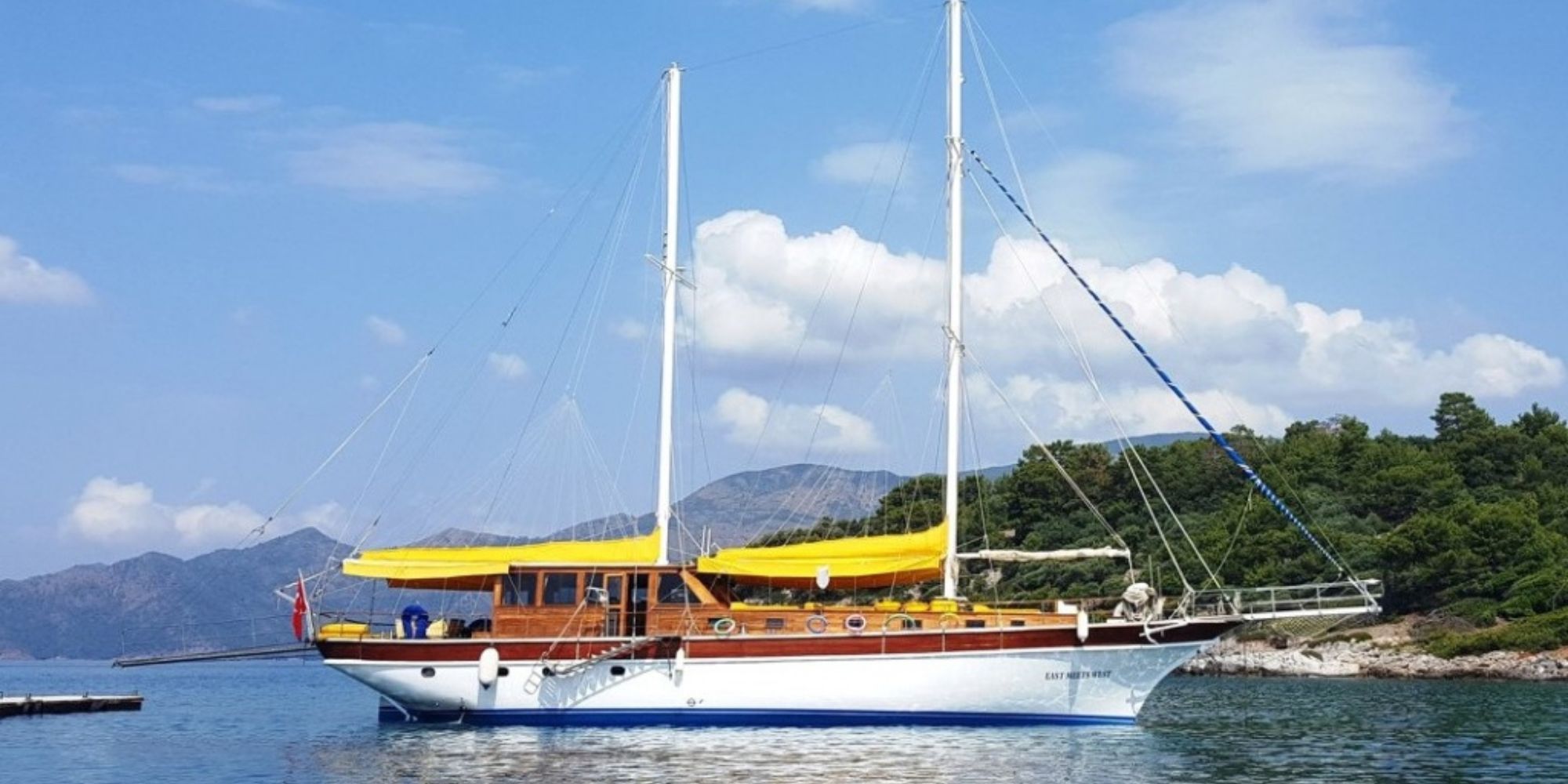
That’s part of what makes exploring the region aboard a traditional gulet feel so immersive.
Rather than rushing between major cities, traveling by gulet slows the experience down. You wake up in quiet bays inaccessible by road. You hike coastal trails directly from the shoreline. You swim beside ruins, eat fresh meals on deck, and fall asleep to the gentle movement of the water.
Many of the most fascinating places along the coast aren’t found in crowded tourist centers. They’re tucked into remote inlets, hidden among pine forests, or perched above the sea on ancient footpaths. Exploring this way creates a stronger connection not just to the scenery, but to the rhythm of the coastline itself. You’ll gain an understanding of why civilizations settled here thousands of years ago.
Myth, Memory, and the Living Landscape of Turquoise Coast
Whether Cleopatra actually swam in Hamam Bay may never be fully known. Stories evolve over centuries, especially in places where mythology and history have always overlapped. But the uncertainty is part of the magic of the coast.
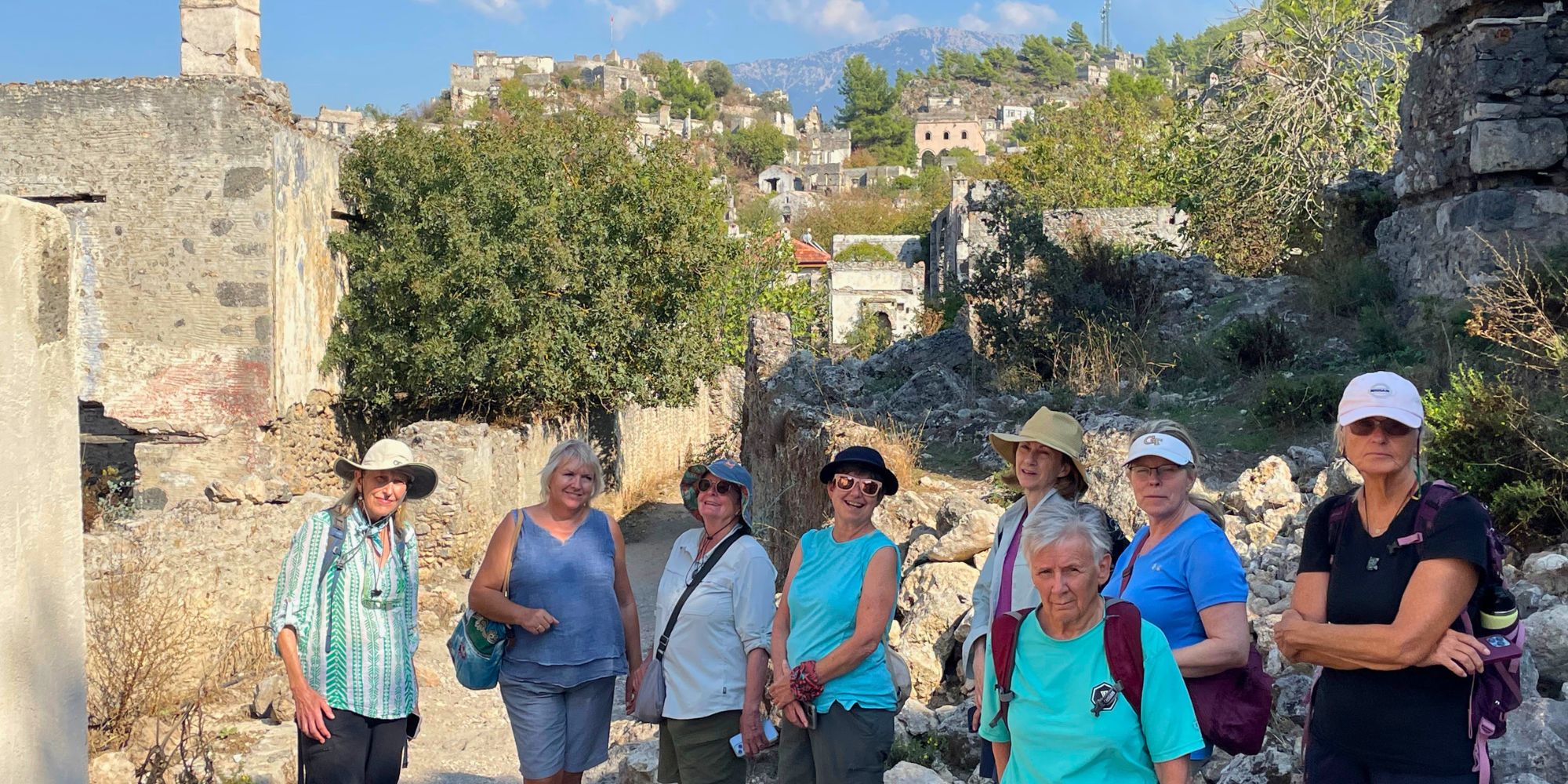
The Roman ruins beneath the water are real. The ancient sanctuary at Nimara Cave is real. The Lycian tombs carved into cliffs, the remnants of forgotten settlements, and the sea routes that once connected entire civilizations are all still here.
Along Turkey’s Turquoise Coast, history doesn’t feel distant. It feels alive and layered into the bays, hiking trails, caves, and harbors that travelers continue to explore today. And perhaps that’s the real reason people have been drawn to these waters for thousands of years.