
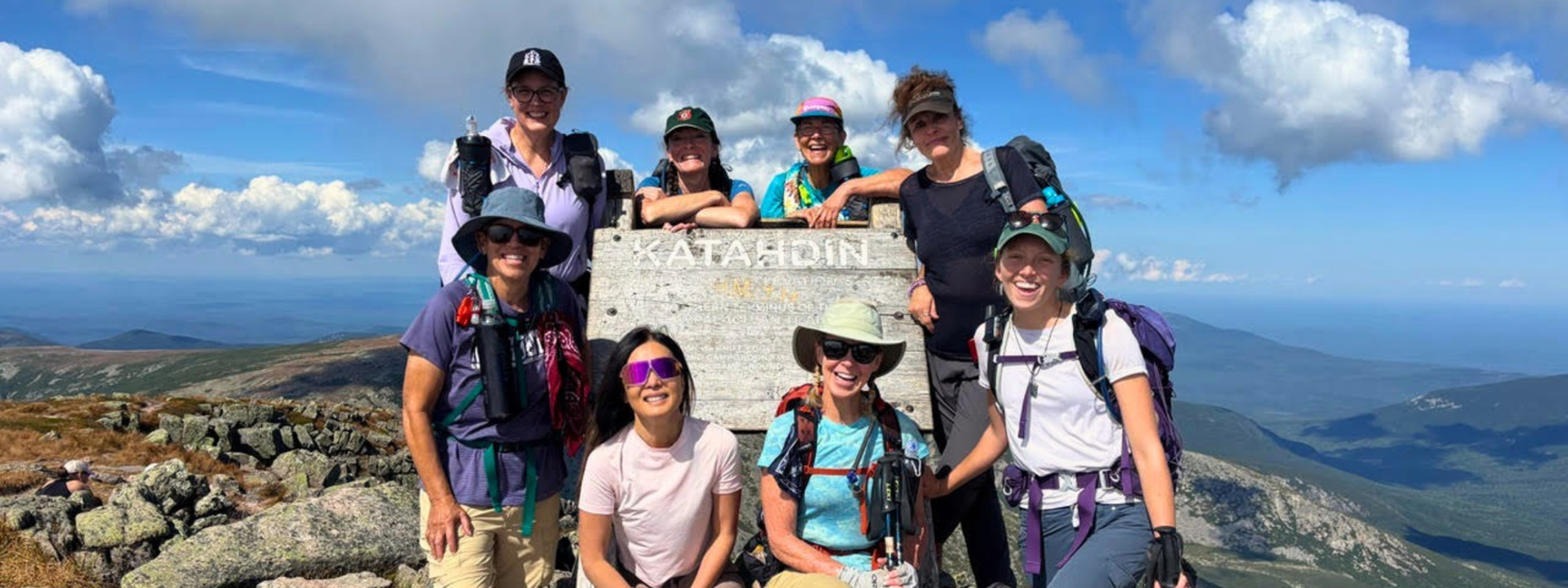
“I need a minute,” a hiker said to me. We were standing on the steepest, most exposed part of the Saddle Trail along the Appalachian Trail in Maine. Underfoot, the loose, broken rock fragments were untrustworthy, threatening to slide further down the scree-strewn slope. She took a deep breath, keeping two hands on the boulder next to her. “Look at the rocks in front of you,” I said calmly. “You’re doing a great job.”
I knew from a pre-trip conversation that this hiker had a serious fear of heights. She was also seriously determined to climb Maine’s Mount Katahdin. As we ascended above the treeline and the view behind us opened up, she kept her body facing the rocks and her gaze forward and up, eagerly eyeing the lip of the saddle we were heading toward. Beyond it, the trail leading to the summit was much less steep. But now we were at the part she’d been dreading. The part where we had to come back down the steep part. There was no way to avoid the sweeping view… or the dramatic drop in front of us. “You okay?” I asked. She closed her eyes and exhaled. “Yes,” she said. Then she chuckled. “I have to be. There’s only one way down.”
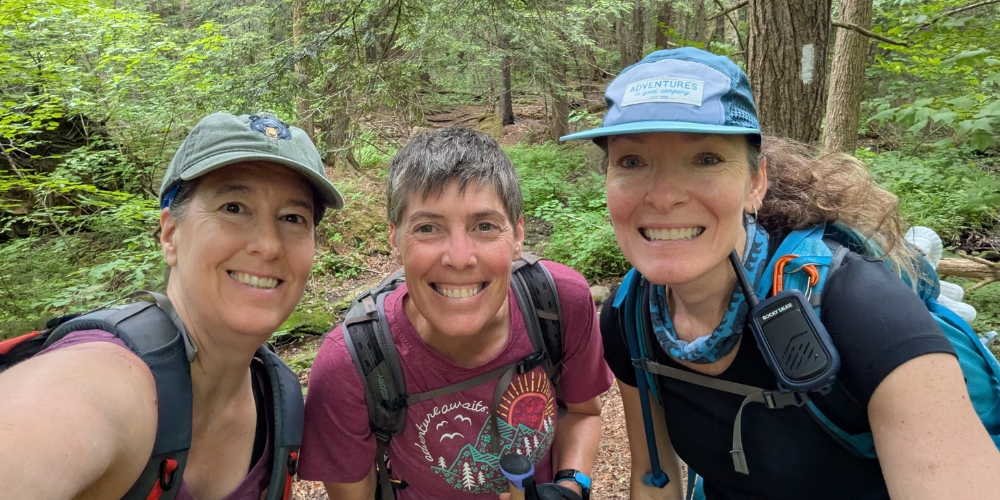

Since I started guiding with Adventures in Good Company in 2022, I’ve met hundreds of women from all over the country on hiking, paddling, and cultural trips. Travelers come seeking adventure, connection, and a sense of accomplishment. Some women arrive on a mission: to climb a specific peak, complete a section of the Appalachian Trail, see a National Park they haven’t visited, or try a new skill they’re eager to learn. Others come with friends or family to share a special experience together. Many come alone, either as first-timers hoping to meet new people or as seasoned solo travelers, confident that an AGC trip rarely ends without a handful of new friends. Whatever calls women to adventure, there are always moments of deep bravery during our time together.
Travel takes us out of our comfort zones and challenges us to try new things, meet new people, and experience new places. When women choose group travel, they collectively make a leap into the unknown. They choose companionship and compromise, knowing they will meet like-minded people and navigate the nuances of traveling with strangers. They overcome the discomfort that first arises when having to share spaces, mix personalities and preferences, and give grace when differences arise. For many women, adventure travel takes a serious amount of courage, and what I’ve learned from the women I’ve guided is that courage is something we often recognize in others but not ourselves. Women rarely give themselves credit for what they overcome or the strength they model for others. Courage has a powerful impact on the people around us, and it’s contagious.
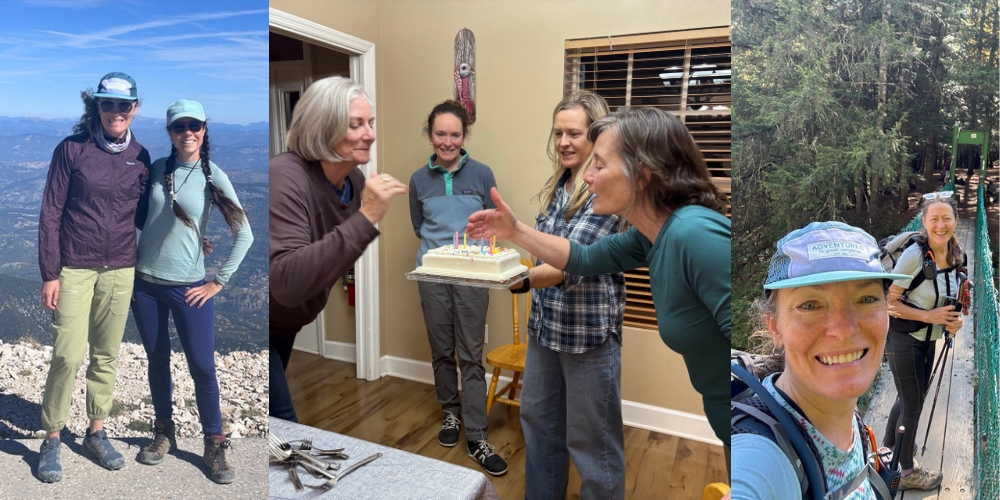
Courage Begins Before the Adventure
Defined by the dictionary, courage is the mental or moral strength to face danger, fear, difficulty, or pain. The core meaning of courage is more nuanced. It is not the absence of fear, but rather the choice to act despite fear. The root of the word, cor, means heart. Courage is to speak one’s mind or to act with one’s whole heart.
Women often arrive on trips feeling unsure of their physical readiness or anxious about fitting in with the group. Luckily, nature has an incredible ability to disarm us. As we move together outdoors, nerves fade, conversation starts, and connection begins. It doesn’t take long for women on group trips to share their backgrounds, open their hearts, and connect deeply. They face challenges together and lift each other up. Friends are made and memories are formed.
What women in their sixties, seventies, and beyond quickly realize is how much they have in common with their fellow travelers. At this stage of life, everyone has been through something hard. Everyone has been a mother, or a partner, or a caregiver, or an employee, or a boss. They have dealt with the challenges of balancing it all and the innate female struggle to make time for oneself. Now, many are caring for elderly partners while navigating changing physical abilities and the sometimes jarring new reality of retirement. Sometimes women who have spent their lives doing it all struggle to do less. When women choose to travel, they choose to prioritize self-care in the form of adventure, community, and health. It is a courageous choice, especially when it’s a new experience. Before the trip even begins, the decision to commit time and resources to travel stirs feelings of bravery and self-determination.
The Stories Women Bring to the Trail
What has surprised me most as a guide with Adventures in Good Company is the incredible variety of experiences women bring to trips. Not their hiking or travel experiences. Their life experiences. Many are very positive, impressive careers, admirable public service, wonderful families, but more astounding are the things they have overcome. I have met women who fled dangerous countries and abusive relationships, women who changed their entire lives to become parents to abandoned children, those who fought illness or lost loved ones to it, and women whose hearts and spirits have been broken by challenging circumstances. Some of them arrive on trips after years of healing, while others come with fresh wounds in hopes that recovery might start on the trail, on the water, or in the woods. It is rare to speak with a woman on a trip and not find a deep, powerful courage in her history, or to recognize her brave willingness to share her experiences with others.
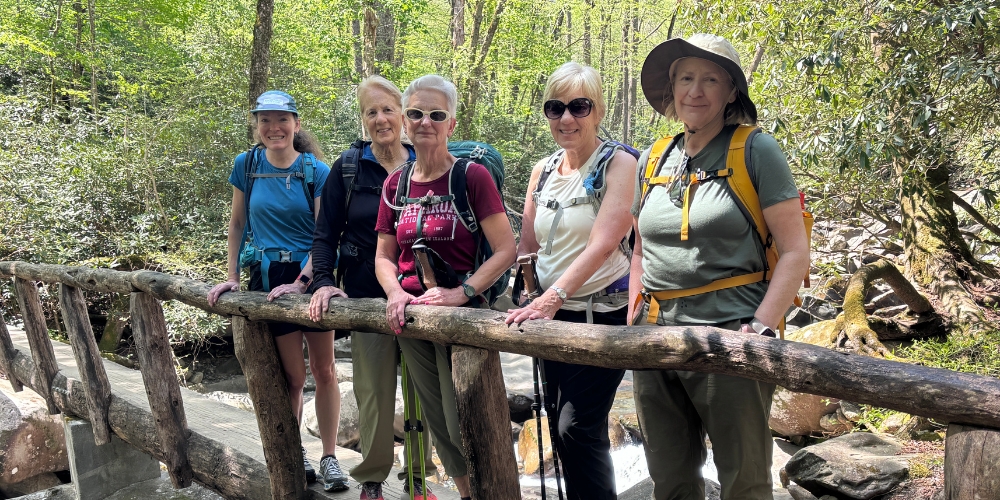
On a trip to the Smoky Mountains, a woman traveled from California for her first group travel experience. She was shy, very much an introvert. The other travelers embraced her wholeheartedly, including her easily in dinner conversation and hot tub relaxing sessions. She opened up slowly, sharing the details of her life in short, guarded stories. Her world had been very small until the recent death of a parent for whom she had spent over 20 years caring for. The desires she had as a younger woman were given up to provide daily support to family and maintain a demanding job. She didn’t have a social network and she had never traveled, but she found the courage to sign up for a trip on the opposite side of the country to see the Smoky Mountains. She loved to be outside, and she hoped to make hiking a bigger part of her life.
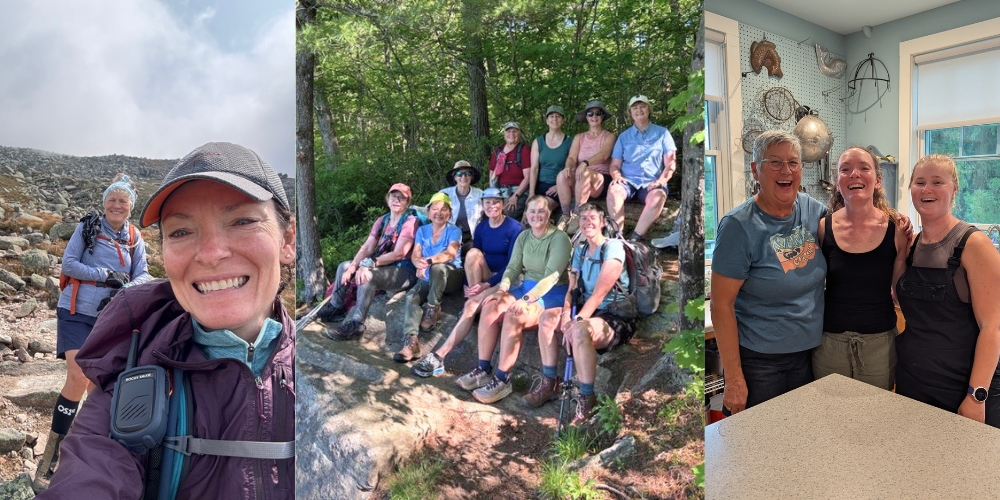
On the last day of the trip, we hiked a section of the Appalachian Trail. She was a slow but steady hiker, and we were moving at our own pace at the back of the group. While we hiked, she told me she had long been enamored with the Appalachian Trail and dreamed of hiking it, but she never thought she’d have a chance to do it. We stopped for lunch, and I wasn’t sure if she was enjoying the day or not. It was the toughest hike of the week, and I could tell it was a challenge for her. She was quiet and reserved, as she usually was, and we ate in peaceful silence. Then she looked up at me and said in a sincere tone, “You know, I think I’m having a life-changing experience out here.” Her brave choice to travel had changed how she viewed herself, her future, and her ability to fulfill her dreams.
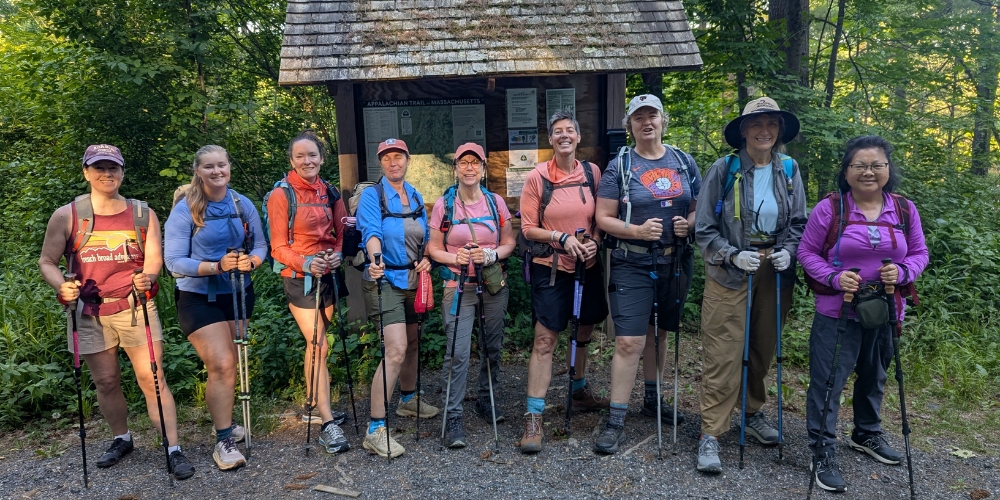
AGC’s Slackpacking trips, which bring travelers to sections of the Appalachian Trail, regularly push women to the edges of their ability and comfort. The miles are long and the terrain is challenging. A new traveler in her mid-sevenites joined our Slackpacking Maine trip, one of the hardest hiking trips AGC offers. She lived in Florida, which made it difficult for her to train for the punishing elevation she would face in Maine. We had multiple conversations before the trip to check in on training, and I was worried about her ability to be physically ready for the trip. It is a common challenge when travelers come from very flat states to hike very mountainous states. I asked her to adjust her workouts by adding more stair climbing and lower-body weight training. She enthusiastically complied and walked miles and miles on the uneven Florida beaches to increase balance and stability. When she arrived in Maine, I learned she had been to Baxter State Park once before to climb Katahdin… fifty years ago. She wanted to find out if she could climb it again in her mid-seventies.
What began as concern for her ability quickly turned to reverence for her determination and preparation. She was by far one of the strongest hikers in the group. At a time in her life when many of her peers at home were enjoying much easier activities, she had bravely chosen to tackle a formidable mountain with a group of women who were all ten to forty years younger. She rose brilliantly to the challenge, inspiring the entire group with her positive energy, can-do attitude, and incredible physical stamina.
What We Learn From Each Other
Women’s travel gives us an opportunity to learn from others, but also to reciprocate. We listen, and we share, and we feel less alone. We receive valuable support from other women who can see our accomplishments much more clearly than we can. We begin to appreciate our strengths and gain a clearer understanding of who we are in the world.
What I’ve learned from guiding women is that we are all courageous, but we often minimize our experiences in order to make space for the experiences of others. It is not uncommon for women to begin traveling after the death of a spouse. It is often a very emotional experience, especially if the loss is recent. There is the sadness of grief, but also the guilt of moving forward. More than once, I’ve watched women care for each other with patience and compassion during these difficult transitions into singledom. On a trip to Shenandoah National Park, a new traveler connected early in the week with a woman whose husband had recently passed. She had also lost a spouse, which she shared with the new widow to create an instant bond. I noticed that she somehow knew exactly what to say to support the widow and help her process her grief on the trail. I learned later that the new traveler had lost her husband in an extremely traumatic way that she herself was still processing. She never shared that information with the new widow. She didn’t want to add to her friend’s sadness or take away from the support that was so needed at that time. She shared with me that it had been a healing experience for her to provide compassion. Both women left the trip with a new friend and a feeling of care received and given.
When we share ourselves fully and unapologetically, we invite others to do the same. To celebrate, to grow, and to heal. Each time a trip ends, I leave feeling a bit more resilient. The feeling comes from witnessing the courage of other women.
Let Your Own Courage Shine
If there are a few things I hope you’ll take from the women I’ve guided, they’re these:
-
Give yourself credit for the courage you already have. Think about what you’ve navigated, accomplished, or overcome. It’s easy to overlook your own strength when you’ve spent years simply doing what needed to be done.
-
Let yourself be a beginner. You don’t need a lifetime of hiking or paddling experience to be open to learning. Ask questions, accept guidance, and give yourself room to grow.
-
Take one step toward something you want. Tell a friend about the trip you’ve been considering, join a local walk, or sign up for a class. A small beginning can help a bigger goal feel possible.
-
Allow others to support you. Accept an offered hand, speak up when you need a break, or share what’s making you nervous. You can be strong and still need encouragement.
-
Share your story, when you feel ready. Something you’ve experienced may help another woman feel less alone. Your joys and accomplishments deserve space, too.
-
Make room for what’s next. Curiosity, friendship, and adventure can remain part of your life in your 60s, 70s, and beyond. Give yourself permission to pursue something simply because it matters to you.
Sometimes Courage Isn’t Optional
Back on the plummeting saddle of Katahdin, my traveler was tackling her fear of heights with a practical method. “You’re right,” I told her. “There is only one way down.” She took another deep breath and looked out at the view. I saw her shoulder relax. “It really is beautiful,” she said. Then, slowly and carefully, we made our way down the slope. Sometimes the idea of what will be scary is so much worse than the thing itself. And sometimes, we find ourselves in situations where courage isn’t a choice. This traveler knew she was putting herself in a situation that would test her fear, and she also knew once she was in it, she would have to go through it.
Finding the courage to travel or to take on a big challenge may feel very overwhelming. I would encourage every woman to think about how strong and resilient you already are, and to remember all the things you have achieved and overcome. The most wonderful thing about traveling with a women-only company is the built-in support and camaraderie. So, set a big hiking goal, visit a new country, try kayaking or horseback riding or writing. You have nothing to lose and so much to gain!

